- Mon, 19 October 2026


How long has it been since you allowed your professional life to look as worn as it actually feels?
This question does not point to crisis or collapse, but rather to the ordinary, relentless work of maintaining surfaces. The composed tone in the Monday meeting that required effort nobody saw. The decisive answer delivered before the uncertainty behind it had fully resolved. The energy extended generously to a team conversation when there was, honestly, very little left to give.
Most of it is leadership and not failure. The difficulty is that over time, the maintenance itself becomes invisible – to others, certainly, and eventually to the person doing it. What began as professional discipline gradually becomes the only way the day is known how to be inhabited. The wear accumulates underneath, unremarked, while the surface continues to present as intact.
This is one of the soft patterns appearing with increasing frequency among experienced leaders, coaches, and practitioners doing serious professional work. The person is functioning well and their capability is not in question. However, something in the texture of how they are operating has become effortful in a way that is difficult to name, because it does not resemble any version of struggle they have been trained to recognise.
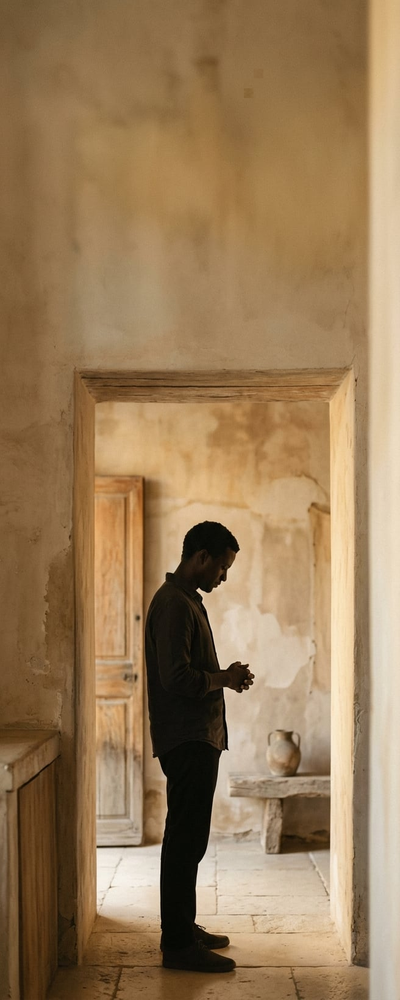
Professional cultures have always rewarded the appearance of composure. However, several converging pressures have intensified this dynamic considerably in recent years.
Digital environments have made professional identity more continuously visible, consequently more continuously managed. Leaders are now observable – on video calls, on internal platforms, on LinkedIn – across a far wider range of moments than previous generations navigated. The result is a kind of ambient performance: the sustained, largely unconscious management of how one is being perceived, in more contexts and for longer periods than most working lives previously required.
Burnout research has expanded considerably in the past decade, and accordingly, so has the vocabulary around it. Most organisations now have wellness programmes, resilience frameworks, and psychological safety initiatives. Yet, the cultures in which leaders actually operate frequently send contradictory signals: exhaustion is acknowledged in principle and penalised in practice. Consequently, many experienced professionals have become skilled at demonstrating awareness of their own limits without actually respecting them.
Generational shifts add further complexity. Younger colleagues entering leadership contexts often bring different assumptions about what credibility requires – specifically, they are less persuaded by the performance of seamless competence and more attuned to authentic engagement with difficulty. Meanwhile, the leaders they report to are operating under accumulated norms that were formed in environments where composure was the primary signal of authority.
The midlife dimensions of this pattern deserve particular attention. Research on adult development consistently identifies a shift, typically in the forties and early fifties, in which the frameworks and identities that structured the first half of a career begin to feel constraining rather than enabling. The work that once felt energising becomes obligation. The professional self that was once experienced as genuinely one’s own begins to feel like a role being performed. As developmental theory suggests, this is a signal that something more authentic is ready to form – and most professional environments offer very little support for that process.
A Japanese concept has travelled widely through wellness and self-development culture in recent years: Wabi-Sabi. It describes a way of seeing that finds depth, beauty, and honest character in things that are imperfect, impermanent, and incomplete.
In its popular version, Wabi-Sabi tends to be offered as encouragement: embrace your imperfections, find beauty in the worn and the aged, release the pressure to be flawless. These ideas are warmly intended. They also tend to apply the concept selectively, as a comfort for specific moments of difficulty, while leaving the underlying structure – the compulsion to present as polished – entirely intact.
The concept asks for something more structurally demanding. Wabi in its original sense referred to a kind of austere, noncurated simplicity – not the absence of refinement, but the presence of something honest underneath it. Sabi referred to the quality that surfaces acquire through genuine use over time: the patina, the weathering, the evidence of having been in real contact with a real life. Together, they describe an orientation that finds depth precisely where managed presentation finds deficit.
Wabi-Sabi does not ask us to celebrate imperfection as a positive spin on difficulty, but to stop treating the evidence of ordinary wear as something requiring correction in the first place.
This distinction carries considerable practical weight. A leader who frames a difficult quarter as a learning opportunity is managing a narrative. A leader who allows the difficulty to be honestly visible, without the retrospective packaging, is doing something different. The first is a communication skill, while the second is a way of being in relation to one’s own professional life.
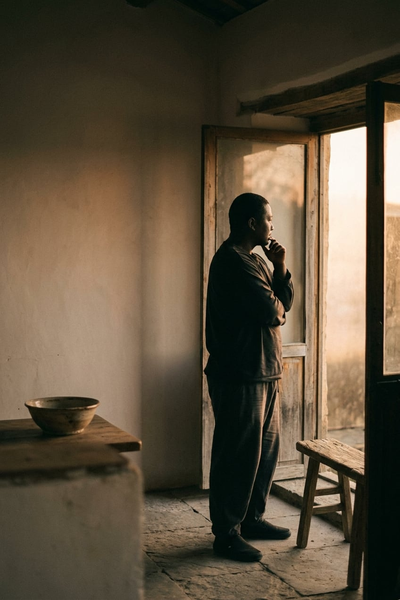
Wabi-Sabi as a lived leadership orientation is not a strategy or a technique that can be measured. However, it does produce something that most leadership development frameworks struggle to generate: a sustainable relationship with the ordinary texture of professional life, including its wear.
In practice, this looks like a leader who allows a meeting to end with a question unresolved, rather than manufacturing closure. It looks like a coach who stays with a client’s discomfort rather than smoothing it efficiently toward insight. It looks like a senior executive who says, in a strategy conversation, that she is genuinely uncertain – and means it, without the follow-up certainty.
Research on acceptance and psychological flexibility consistently finds that leaders who maintain a more honest relationship with their own limitations – specifically, who are less invested in concealing ordinary difficulty – demonstrate greater long-term resilience, stronger relational trust, and more accurate situational awareness than those who prioritise the performance of composure. Neuropsychological research on acceptance suggests that the cognitive habit of allowing things to be as they are, rather than continuously managing their presentation, is associated with measurably different patterns of emotional regulation and openness to experience.
Furthermore, the effect on teams is significant. The leader who is visibly, ordinarily imperfect – in the texture of daily work, not in a curated moment – creates conditions in which others can be honestly imperfect as well. Accordingly, real problems surface earlier and uncertainty is named rather than masked. The quality of information flowing through the organisation improves.

For leaders, coaches, and practitioners navigating this territory:
These questions are designed to slow down the automatic maintenance long enough for something honest to surface.
Let us return to where we started – to whether you are allowing it to look as worn as it actually feels.
Wabi-Sabi suggests that the depth, the character, and the genuine authority of a professional life are not located in its polished surfaces. They are located in the evidence of genuine engagement – the marks of real work, real difficulty, real presence in demanding conditions over time. A surface that shows its history is, in the Wabi-Sabi sense, more honest and more interesting than one that has been continuously maintained into apparent newness.
The wear is pure information.
What might become available – to you, to the people you lead or accompany – if it were allowed, finally, to show?
Wabi-Sabi asks for a more honest quality of attention to what is already there and that attention is available right now.
It requires nothing except the willingness to look.


Sign up our newsletter to get update information, news and free insight.