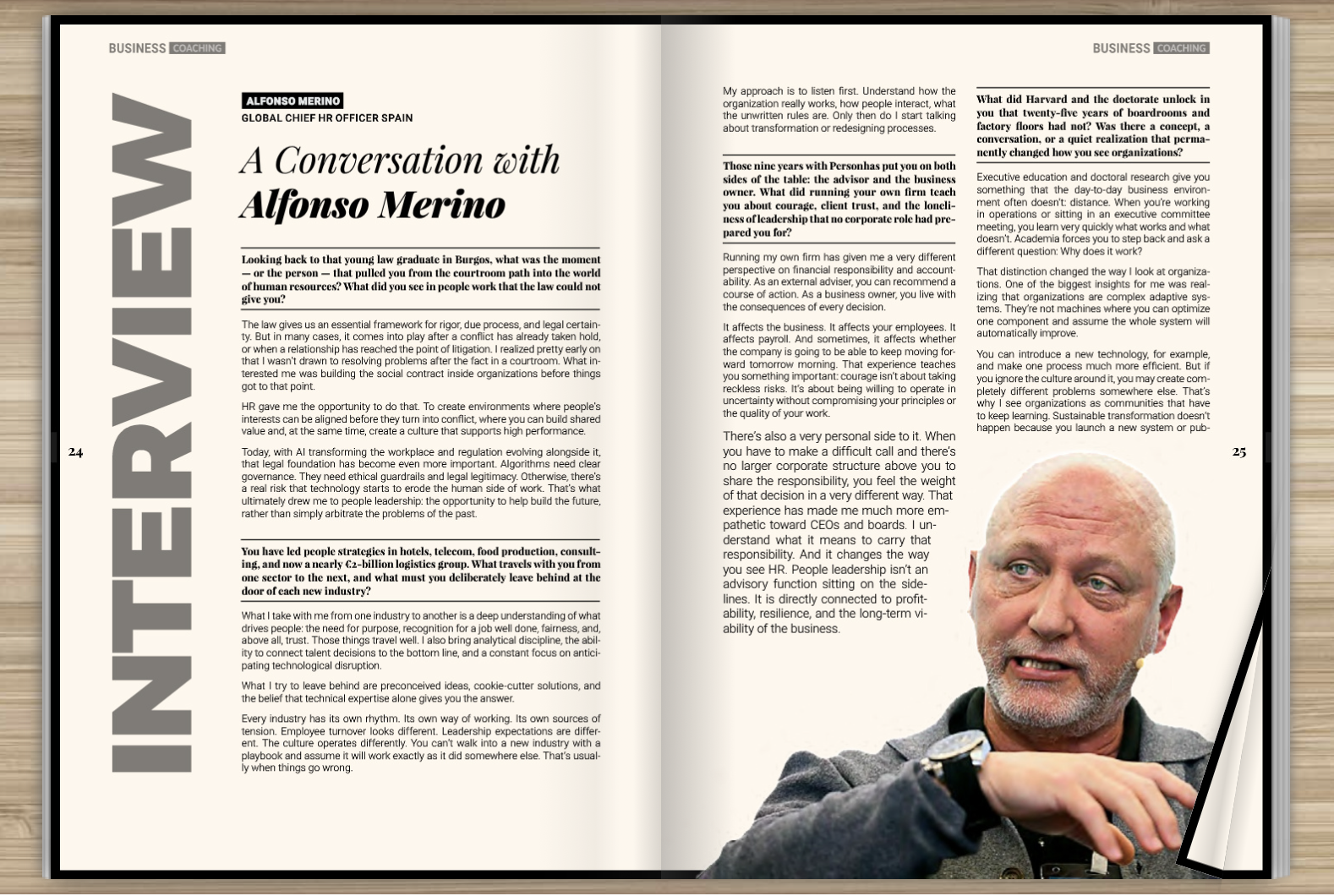


Everyone claims to be curious. Ask anyone whether they consider themselves a curious individual, and they will say yes without hesitation. Companies are touting curiosity in their corporate values. CEOs are encouraging their employees to dial up their curiosity to reinvent themselves and their organisations. The belief is that not being curious will make us redundant. Curiosity is considered a positive psychological trait that everyone should possess.
But what do we really mean by curiosity? When using the word, we all have a mental model of what it means: that curiosity is a fixed personality trait, that it is easy, and that it is inherently linked to the individual.
What if I told you that most of these ideas are incomplete or wrong? Given that we consider curiosity important for us as individuals and professionals, it might be useful to pause and reflect on how it works and what the implications are for professionals and leaders.
Is curiosity a fixed personality trait?
In most cultures, people think curiosity has been handed to us in a fixed amount at birth. In this view, some of us have more of it, others less. Those who have lots of it are blessed.
The curiosity we’re handed at birth matters less than we think.
Think of curiosity more like a muscle than a fixed thing: with practice and focus, we can dial up our level of curiosity, and without it, it atrophies. I worked with a CEO over an extended period of time. In his monthly review meetings — highly formalised, with standard presentations and reporting templates — he added a single question: “What are we not seeing in the data?” This simple yet powerful question changed the dynamics of the meeting, deepened the discussions and initiated new thinking. Curiosity, it turns out, can be dialled up with one deliberate question.
Interestingly, we often consider curiosity as being closely linked to an individual. The amount that an individual brings to the table is important, yet this is only part of the equation. For curiosity to flourish, it also needs a fertile environment, and the depth and breadth of curiosity of an individual at work is hugely influenced by the colleagues, the prevailing culture and the direct manager. Imagine a manager who stifles curiosity in every new question versus a leader who role models openness and invites it naturally in her team.
Is curiosity easy?
Curiosity is hard. To explain, let’s explore the opposite power of curiosity: conformity.

Conformity is about keeping, curiosity is about seeking.
Conformity is often the stronger and the easier of the two. Consider this: quickly picture the people you enjoy being with at work. Now also think about the people you don’t particularly enjoy being around. There are always colleagues who are different from us, people we typically want to avoid. Being curious about the people we enjoy is easy, yet when we consider people we enjoy less, we tend to swap curiosity for conformity. We judge these people. We blame them for not being likable.
Abraham Lincoln is said to have had a different strategy. As the story goes, he remarked: “I don’t like that man, I need to get to know him better.” Instead of blaming the other person for not being likable, he chose curiosity instead. This kind of curiosity is more authentic. It is not afraid to challenge the status quo. It requires courage and humility. Courage to reach out to the person, and humility to potentially be proven wrong.
Research shows that this strategy works wonders. Work by Pettigrew and Tropp for instance has shown that when doing so, it reliably reduces prejudice, reduces anxiety about ‘the other’ and increases empathy. Not only do we come to see the other person more fully and more positively, it also changes us.
So next time you catch yourself avoiding a colleague, remember Lincoln’s words. Invite them for that cup of coffee. Curiosity costs a little courage and humility but it is the shortest route from “I don’t like that person” to “I understand that person.” And in understanding, both of you grow.
Is curiosity focused only on the world?
The definition of curiosity at the Global Curiosity Institute is that curiosity is “the will to challenge the status quo.” Its playing ground is the world at large, our relationships and ourselves.
Curiosity about the world is an important dimension of curiosity. It is the drive for children to learn about the world and for scientists like Albert Einstein to explore the laws of the universe. Closer to home, it invites all of us to learn new things and be open to novelty in the world around us. In the workplace, this is the curiosity behind questions like “Why do we do it this way?” and “What can we learn from how another industry solves this?” Teams that practise it systematically challenge their own assumptions before their competitors do. For teams and organisations, this type of curiosity is closely linked to creativity and innovation.
Yet curiosity goes further. It also is a wonderful tool for interpersonal flourishing. Curiosity invites us to be curious about the people around us: people we live and work with, as well as strangers. In practice, it shows up in small acts: asking the second question instead of the first, truly listening instead of rehearsing your reply, wondering why an unusually quiet colleague is unusually quiet. The better we are at this, the more we can put ourselves in the shoes of others and thrive in our relationships. Its absence is just as visible: teams where colleagues assume they know each other, stop asking, and slowly drift into silos and friction.
It does not stop here: curiosity also has the capability to turn inwards and explore our deeper selves. Curiosity guides our self-reflection beyond the stories we like to believe about ourselves. This is perhaps the hardest dimension, because our own stories are the ones we defend most fiercely. It takes real courage to ask: “What if the problem the team keeps facing is partly me?” or “Which of my beliefs about my own abilities is simply out of date?” Self-awareness increases when we allow curiosity to explore our deeper individual and collective beliefs, even our limiting beliefs.
Together, these three playing grounds reinforce each other. Curiosity about the world gives us new perspectives, curiosity about others helps us connect those perspectives to the people around us, and curiosity about ourselves keeps our own lens honest.
In closing
Curiosity, in the end, asks only two things of us: that we keep asking, and that we stay willing to be surprised by the answers. Every innovation, every genuine connection, every moment of growth begins with someone willing to ask.
So before you close this piece, ask yourself one question: where in my life – at home or at work – have I stopped being curious? Then take the shortest route back: measure where you stand with the short diagnostic at https://www.globalcuriosityinstitute.com/individualdiagnostic, and let the answers sharpen your own definition of curiosity and where it could show up more fully in your life