- Wed, 20 May 2026
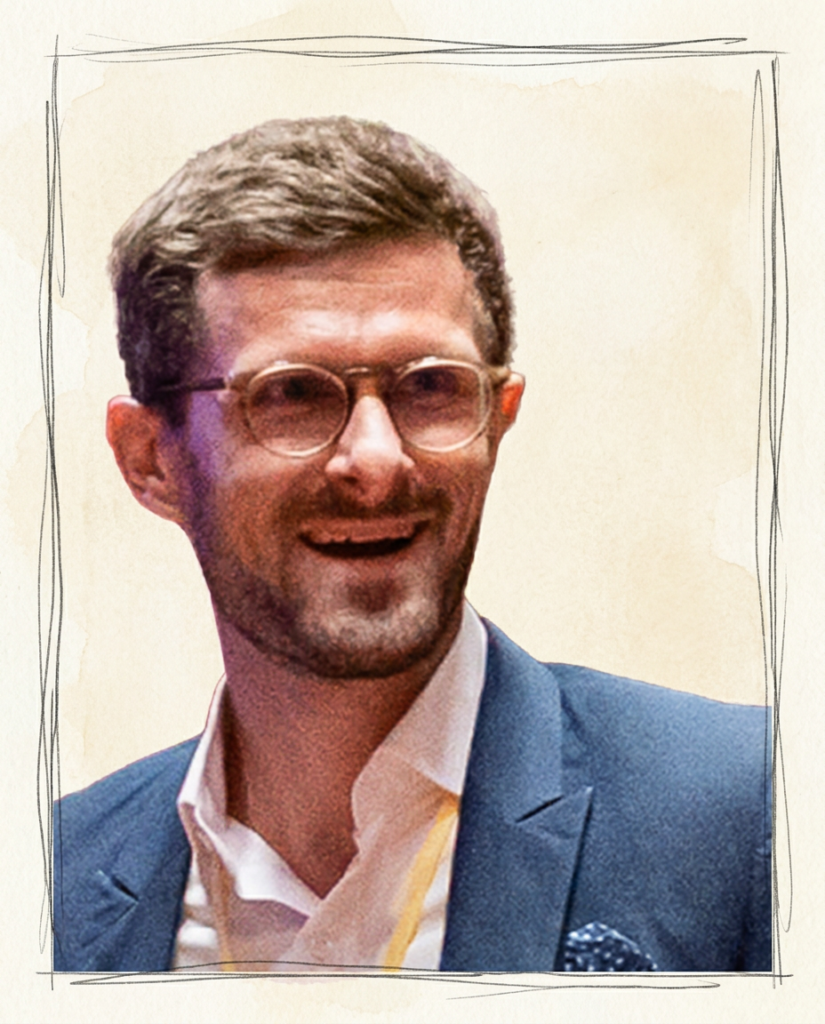
David, your career has taken you from global brands like L’Oréal, Mars, Google, to the World Economic Forum, and now Generation.org, one of the largest employment nonprofits in the world. That’s a really amazing journey across the private, public, and nonprofit sectors. Can you walk us a bit through the pivotal moments that shaped your career path thus far?
“You can’t connect the dots looking forward; you can only connect them looking backwards,” to quote Steve Jobs. If you’d asked me the same question 10 years ago, I would have not known exactly how the dots will connect in my own career, but I’ve had a North Star, which is my mission in life, to prepare people for the future of work. And I’ve used this as a filter for all the career-related decisions I’ve made.
I began my career working in the fast-moving consumer goods industry, at companies like Mars Inc. and L’Oréal. But as soon as I felt that I learned what I needed to learn when it comes to trade marketing and PR, I gravitated toward the United Nations, thanks to an amazing opportunity I had when I was still under 25.
About 10 years ago, I was given the chance to serve as Romania’s Youth Delegate to the United Nations, the main arena for world diplomacy, for a one year mandate, which also gave me the opportunity to figure out if I would like to work for the UN in the future. And during my time as a Youth Delegate, the Sustainable Development Goals, also known as the SDGs, were adopted. Together with the other Youth Delegate from Romania (each year two young people were selected), we’ve held hundreds of workshops across Romania, to help young people understand what the SDGs are, why they are important for their future, and how they can contribute. Little did I know at that time, but the youth outreach, advocacy, and community and event organising experience I was getting was very relevant to Google Romania, who at the time was looking for a Program Manager to launch Grow with Google nationally, which is Google’s largest digital skills initiative in the world. Given my experience as a UN Youth Delegate, I was a perfect fit, and got a job I couldn’t have even dreamed of. I’ve done that for three beautiful years, during which we’ve equipped more than 150,000 young people with digital skills through both online and offline training. Then, someone within the Google UK team offered me the opportunity to interview for the first-ever Google EU Civics Outreach Fellow position in Europe, based out of Brussels, Belgium. This role, which was structured as a one year rotation, gave me the opportunity to equip politicians running for the 2019 European elections with digital skills to campaign better online, while staying safe from cyber threats.
This was the first phase of my professional journey, the first six years of my career. After, in 2021, after getting another Master and briefly working in the public affairs consultancy space during COVID, I embarked on the journey I’m currently on, which is with Generation.org, one of the largest employment nonprofits in the world.
You wear several hats in this AI space, like Senior Fellow in AI Governance at the Global Governance Institute, AGI Strategic Course Facilitator for BlueDot Impact, and Prompt Engineering Trainer. So, for business leaders who now feel overwhelmed with this pace of AI, where would you tell them to start?
To clarify, whilst I am fully employed at Generation.org, where I work in a global communications and public affairs role, outside of my day-to-day job, I’m very active in the AI space both in Brussels and globally. I actually delivered my first TEDx talk on AI and its impact on work and skills in 2019 in Luxembourg, so I was a few years ahead of the curve on this topic, which started to captivate the world’s imagination after OpenAI launched ChatGPT in November 2022. And I’ve leveraged this early mover advantage by delivering trainings on prompt engineering ever since to help make sure that people use AI tools not just efficiently but also responsibly. And on top of it, indeed I also facilitate the AGI Strategy course (AGI stands for Artificial General Intelligence) for BlueDot Impact to prepare the next generation of young professionals who would like to pursue a career in AI safety and governance.

And indeed, I’m a Fellow, not just with the Global Governance Institute in Brussels, but also with the World Economic Forum in Geneva and with the Special Competitive Studies Project (SCSP), a think tank in Washington D.C. founded by Eric Schmidt, the former chairman of Google, and the late Henry Kissinger. So I’m working on AI on multiple different levels, research, advocacy, and corporate training, given my work with companies to help them deploy AI more responsibly and ethically.
A question that’s super important for a lot of business leaders, or even entrepreneurs. They’re confused, they’re overwhelmed with so much information about AI. So where do you think they should start?
When it comes to learning about AI, I always like to joke, follow me on LinkedIn because I make sure everything I learn about this topic, I’m sharing with the rest of the world, and I publish something daily on my LinkedIn page to keep people informed, both of the exciting developments, but in particular of the risks.
The other thing people can do is to try out these tools, see how they can improve their efficiency at work, and improve their day-to-day lives. Because you can use AI tools to plan your next holiday, to create new meal plans, and personalize the bedtime stories you read to your children. You can do a lot of things with AI tools if you put in the time to learn how to use them, to explore their limitations, and to become more aware of their risks. You just need an internet connection.
And will.
And of course will. That’s not easy at all, but it really depends on each individual. You need to motivate yourself to have the fire in the belly, as we call it at Generation, to take that step into the learning journey, and to embrace AI, not fight it.
You said once that starting from a foundation of fear never leads to good results in AI. Still, many business leaders are genuinely anxious. So how do you help organizations shift from fear to a collaborative mindset with AI?
I am usually one to shake things up a bit and to make people aware that some of the AI-related risks are real and the impact of AI on labor markets can already be seen, maybe not as much in Europe as in the US, but there are already enough reasons for concern to keep us aware of the potential opportunities and risks.
In an ideal world, we would have an educational system that catches up with the latest developments in AI and helps prepare people for the ongoing transition. But in reality, given how new the technology is (generative AI is only about three years old, if we take the launch of ChatGPT as its first inflection point) and how fast it’s being developed, you should push yourself to learn because nobody’s going to spoon-feed you the knowledge you need to not just survive in the age of AI, but thrive. In today’s world, we should each take ownership of our personal development, rather than wait for someone else (the government, an employer) to care more than we do.
Maybe we need to accept that AI is here to stay and learn to live with it?
Yes, the “AI genie” is out of the bottle. You cannot put it back. AI is now intertwined with geopolitics, so the topic is relevant not just for companies but for governments, given how the development of AI has, unfortunately, become a race between the US and China, and the rest of the world. And while it is a race, I don’t think this topic will decrease in importance. It will only increase in importance and I believe that it’s going to be one of the most important topics on the political agenda in the future.
So you cannot ignore it. Instead, you have to lean in, use it, learn how to use it effectively and responsibly, and be part of this transformation, not be left behind.
You’ve spoken about four C’s — communication, collaboration, creativity, and critical thinking — alongside adaptability, resilience, and continuous learning. If you had to pick just one skill that will matter most in the next five years or in the next decade, which one would it be and why?
In my view, it’s critical thinking. Because if there’s one skill that is more threatened by an over-reliance on AI, and the addictiveness of social media, it is critical thinking. It’s the skill that we develop ever since we are in primary school, through writing, amongst other practices, through staying with the problem for longer, which is what is required when you have to write an essay or a homework assignment.
So critical thinking is the key skill, and the only way to protect it for young people is to nudge them to write their own written assignments and their own essays, even if it’s tempting to use ChatGPT or other tools to delegate that writing task. Not taking everything you read as real before you double-check it requires training.
That’s really good advice. And what role will HR play in facilitating this transition to an AI-powered workplace, and how does the role need to evolve from where it stands today?
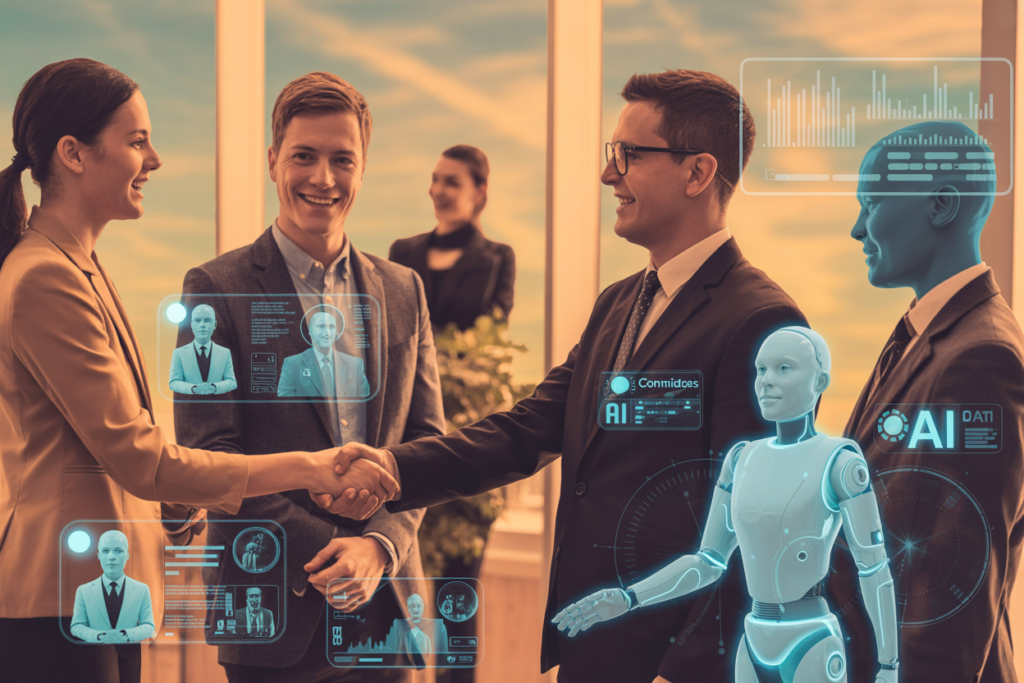
I sometimes like to say during my talks that “AI will make HR great again”. Because HR has had, over the past few decades, a bit of bad PR from various media outlets. And I think the role of HR has never been more important, because what I see in organizations that ask me to train their workers in AI and prompting, it’s that I’m usually interacting the most with HR people. So HR has a key role to play to attract trainers like myself to help skill the workforce, and also they have a key position sitting in between C-suite executives and the employees to make sure the executives’ demands are translated transparently and effectively to them, and that also the worker voice remains heard and listened to at the executive level.
As someone deeply involved in education and workforce development, what does a truly future-proof education system look like to you?
If I had to point out two fields or industries that will be heavily disrupted by AI, which will bring with it both challenges and opportunities, it’s healthcare and education.
When it comes to education, AI can enable us as a society to democratize education, make it even more accessible than it has been thus far by having, as Salman Khan of Khan Academy says, a tutor in your pocket. An AI chatbot that knows you and knows how to teach you in a personalized way. Because not every child learns in the same way and when you’re a teacher with 30 pupils in your class, it’s not easy to adapt your teaching style to the learning styles of each pupil.
In my view, the educational system should encourage the use of AI and take responsibility to teach the next generation how to focus on the responsible use of AI. AI is an amazing opportunity to overhaul education and adapt it to the realities of the 21st century, and the only way forward for the education system is to embrace AI, deploy it, and support the responsible adoption of AI among young people.
And if you could give one piece of advice to a business professional that reads this interview, someone who feels uncertain about the future of their career, maybe, in the age of AI, what would you tell them?
It’s the same advice as for any person, it’s about putting in the time needed to learn how to use AI tools, since it’s never been easier to start using a new technology. And to get the most from AI requires actually taking the initiative to use AI.
And to make sure that you build some anti-fragility in your career by not putting all of your “career eggs” into one basket (your current profession), but already thinking if in 5, 10 years, my profession is not going to be in as high demand as it is today, or it’s going to be more disrupted by AI than other professions, what will I do? Because especially if you want to do something that brings you meaning, the chances are you’re not going to find it if you’re disrupted by AI in 5 years and you have no backup plan. The likelihood that you will get the opportunity you find to be the most meaningful increases if you start preparing for that opportunity today. As the former CEO of Intel Corp., Andy Grove, used to say, “only the paranoid survive”.
Any last words?
See this AI transition as a unique moment, a unique opportunity, and be grateful that you’re alive to experience it. Use the fears you have, which are very normal in times of change, to spur you into action, to give you the urgency needed to take the leap into the unknown, to learn a new skill, to position yourself better for the future.
My message is one of empowerment and enthusiasm because it’s an amazing time to be alive, and it’s an amazing opportunity that our generation has been given to use AI ethically and responsibly, and for the benefit of the many, not just the few.
Sign up our newsletter to get update information, news and free insight.