Companies grow by developing people
~interview~

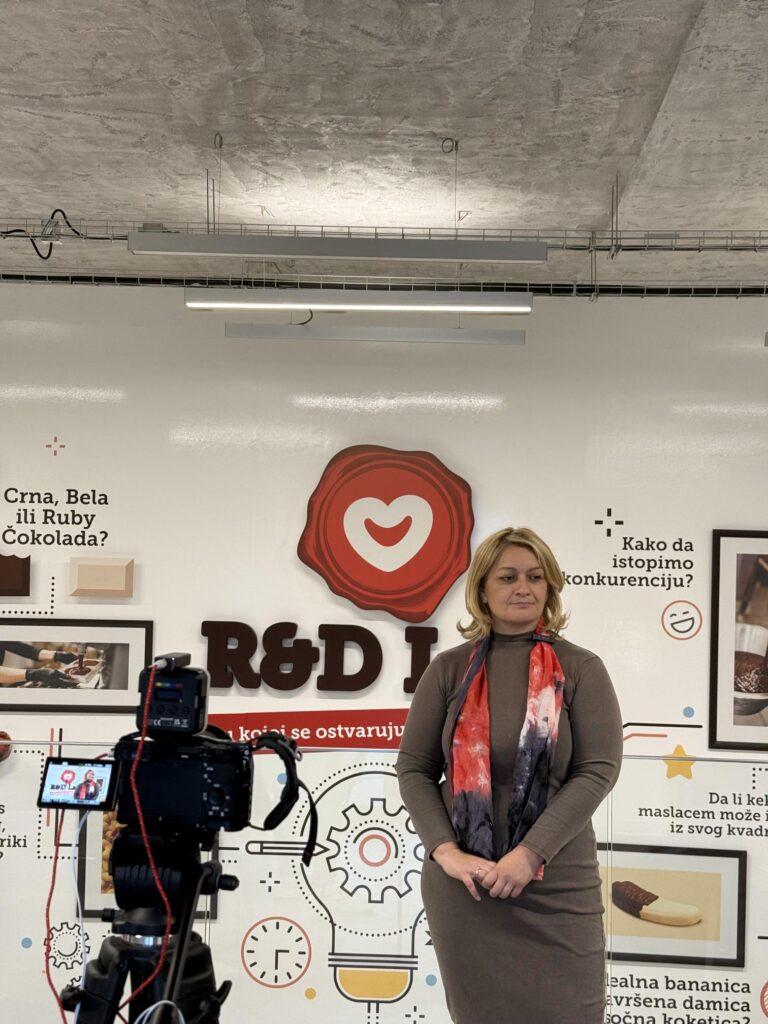
Ivana Nikolic

Production Director Štark at Atlantic Grupa

Serbia

Ivana, to begin, how do you currently define the relationship between leadership and organizational development?

Regarding leadership, I view it primarily as a personal process. Leadership is not a title; it is a mindset of continuous learning, self-reflection, and the cultivation of skills that enable you to influence others in a healthy and inspiring manner. I believe that leadership is developed through experience, introspection, and a fundamental openness to change – a personal journey that never truly ends. Organizational development, on the other hand, I perceive as the systemic dimension—encompassing the processes, structures, culture, and tools that ensure organizational stability and progress. While these two aspects are formally distinct, they are deeply interconnected in practice. Without clear and authentic leadership, organizational development remains merely a theoretical concept. Conversely, without robust (snazan) organizational systems, even the most capable leaders cannot achieve their desired impact. When leadership and organizational development are aligned, the organization thrives, benefiting from a clear vision, motivated people, and processes that drive results.To summarize: the goal of leadership is to unite people around a common direction and inspire them to achieve their full potential. The goal of organizational development is to create a stable and healthy system in which both the individuals and the organization as a whole can achieve long-term growth.

  1. Looking back on your professional journey, what experiences most shaped the way you work with leaders and organizations today?


My path has been shaped most by the diverse roles I’ve held, the teams I’ve been part of, and the leaders I’ve worked with. Every change in environment brought a new perspective and a new lesson—sometimes recognized immediately, and other times only later, upon reflection, when I could see how those moments strengthened my leadership skills.Working in production, operations, and in close collaboration with senior management taught me that organizational challenges rarely stem from a single source. More often, they result from a misalignment of people, goals, structure, and communication. This taught me to view the system as a whole and to understand that no decision, process, or behavior exists in isolation. In such environments, I realized the vital importance of clear and consistent communication—not just as a tool, but as a bridge connecting strategy, people, and results. I’ve learned that open communication is often more critical than a perfectly defined process, and that the willingness to hear different perspectives is key to solving complex operational challenges. Leading change shaped me further. It taught me that strategy only works when people understand and believe in it. You can have the best vision on paper, but if the team doesn’t see themselves in that story, real change is hard to achieve. I believe in leadership that connects—leadership that not only sets the direction but also creates the conditions for people to truly follow that path. Today, when working with leaders and organizations, I rely on this blend of experiences: an understanding of systems, processes, and structures, combined with a deep conviction that leadership is a personal process. It requires continuous learning, reflection, openness to feedback, and the courage to change yourself as much as you change the organization.


In your view, what are the most common organizational challenges companies face when they want to grow without losing clarity, alignment, and focus?


When companies enter a growth phase, three challenges tend to emerge most frequently — and they are all deeply interconnected. The first challenge is a blurred strategy. Growth inevitably brings an increasing number of initiatives, as organizations naturally adapt to the market, new opportunities, and internal needs. At the same time, however, it often becomes less clear to people what truly matters most. Without clear and consistent communication, each team begins to form its own version of priorities, and alignment is quickly lost. The second challenge is unclear roles. An organization may have a strong vision, but if processes and responsibilities do not evolve alongside growth, bottlenecks, duplicated efforts, and frustration begin to appear. In these situations, the role of leaders is critical. They need to thoughtfully balance speed and stability — avoiding both rushed decisions and outdated structures that no longer support growth.The third challenge, equally important, is people’s capacity — not in terms of headcount, but in their ability to adapt to change. Flexibility, fast decision-making, and a willingness to learn become fundamental to success during growth. If people do not develop at the same pace as the organization, focus, energy, and initiative start to fade — directly impacting results. Communication runs through each of these challenges and should never be underestimated. As organizations grow, communication flows become more complex, and assumptions multiply. Without a clear ‘why,’ ‘what,’ and ‘how,’ even the best strategy remains only a plan. Communication is, in essence, the glue that holds clarity, alignment, and focus together.

From your experience, what is the biggest mistake leaders make when trying to improve performance or transform their organization?

The biggest mistake leaders make during transformations is attempting to change processes before changing behaviors. Introducing new KPIs, tools, or structures may seem like a quick way to improve an organization, but if leaders haven’t first engaged key stakeholders and clearly understood what needs to change in terms of mindset, communication, and leadership – the transformation quickly loses its purpose. Without a shift in behaviour, new processes become just another layer of complexity rather than a source of better results. In some cases, people may adopt a tool, but not the way of working that comes with it — and that is where the greatest risk of project failure lies. In my experience, sustainable transformation starts with mindset and culture. Only then can processes truly come to life and deliver the intended impact.


What role does self-awareness play in leadership effectiveness, especially when leaders are responsible for shaping teams, systems, and long-term direction?

For me, self-awareness is one of the clearest indicators of maturity in leadership. A leader who understands themselves—their strengths, weaknesses, triggers, and typical reactions—is far more likely to make sound decisions, lead with stability, and create a healthy work environment. Self-awareness is, in fact, the foundation on which everything else rests. When a leader recognizes their strengths, they can leverage them effectively. When they acknowledge their weaknesses, they remain open to improvement or to surrounding themselves with people who complement them. And when a leader understands their own reactions under stress, they can prevent the transfer of pressure to the team, engage in difficult conversations without avoidance, and provide support instead of control. Without self-awareness, leaders often fall unconsciously into patterns that hold teams back—transferring stress, avoiding responsibility, micromanaging, or suppressing initiative. All of this directly affects the quality of collaboration, trust, and results. That is why I believe self-awareness is crucial precisely at those moments when leaders shape teams, systems, and long-term direction. It enables them to lead authentically, with stability and clear intent—forming the foundation for any sustainable organizational growth.


How do you approach resistance to change—both at the leadership level and across the wider organization?

From my experience, resistance is a natural part of any change, even when the change is small. That is why I do not see resistance as an obstacle, but as information — a signal that something needs clarification, discussion, or deeper involvement of people. When working with teams, I start by listening and understanding the source of resistance. From there, I build involvement and maintain open, consistent communication. I strongly believe that people are most committed to what they have personally contributed to. That is why I deliberately highlight even the small wins throughout the process — they create momentum, energy, and motivation. When working with leaders, I focus on aligning expectations and clearly articulating the “cost of not changing.” When there is a shared understanding of why change is necessary and what is at risk if we avoid it, the transition into collective action becomes much smoother.


For leaders who want to build stronger teams, where should they start: structure, communication, mindset, capability, or something else entirely?

All of these dimensions—structure, communication, mindset, and capacity—are deeply interconnected and influence one another. However, when a leader wants to strengthen their team, there is one place that represents the most natural and effective starting point: clear communication. Clarity lays the foundation and prevents confusion, frustration, and misalignment. When a team shares a common understanding of purpose, priorities, expectations, and responsibilities, everything else becomes significantly easier. Consistent, transparent, and simple communication enables:

  • structures to be established and maintained more clearly,
  • mindset to be anchored in behaviors that support collaboration and accountability,
  • capacities to be directed and utilized effectively.

When communication is clear, all other components are able to operate at their full potential.


What advice would you give to coaches working with senior leaders who need to influence not just individuals, but whole systems and organizational dynamics?

The work environment is rarely a calm harbor—daily challenges, pressure, and urgent tasks often take precedence over long-term strategy. In such conditions, leaders can easily slip into an operational spiral: solving problems, putting out fires, and providing quick answers. When this becomes a habit, balance is lost. My advice for coaches working with senior leadership is this: help leaders shift their focus from fixing individuals to designing and shaping the systems in which people operate.


If you could encourage business leaders to adopt just one new habit or perspective that would improve their leadership impact, what would it be and why?

I believe that regular reflection is the tool that can make the greatest difference in leadership impact. It helps interrupt automatic behaviour, improves the quality of decision-making, and creates a clear distinction between good and truly exceptional impact. I have listened to and read the experiences of many great leaders on this topic, and I am very aware of how “costly” reflection actually is—not in terms of resources, but in terms of discipline. It is difficult to practice in environments defined by high pace, constant demands, and pressure to continuously react. Precisely for that reason, I believe reflection should not be neglected or left at the level of a good idea. On the contrary, leaders need to consciously find ways to implement it through their own example—even in a minimal, but consistent form.

To close, what message would you like to share with business leaders and coaches who want to create organizations that perform well and grow in a sustainable way?

The message I want to share with business leaders and coaches who aim to build organizations that last and grow sustainably is simple, yet demanding: communication and trust are strategic prerequisites for sustainable growth. I have emphasized their importance many times because organizations built on clear, consistent communication and high levels of trust possess a solid foundation for everything else. Only on such a foundation does it truly make sense to build strategy, invest in team development, strengthen leadership capabilities, expand capacity, and drive innovation. There will inevitably be years that are more or less profitable. However, the long-term goal of leaders should not be merely to achieve a successful year, but to build an organization that is resilient, adaptable, and prepared for the future and for change.

Subscribe our newsletter

Sign up our newsletter to get update information, news and free insight.