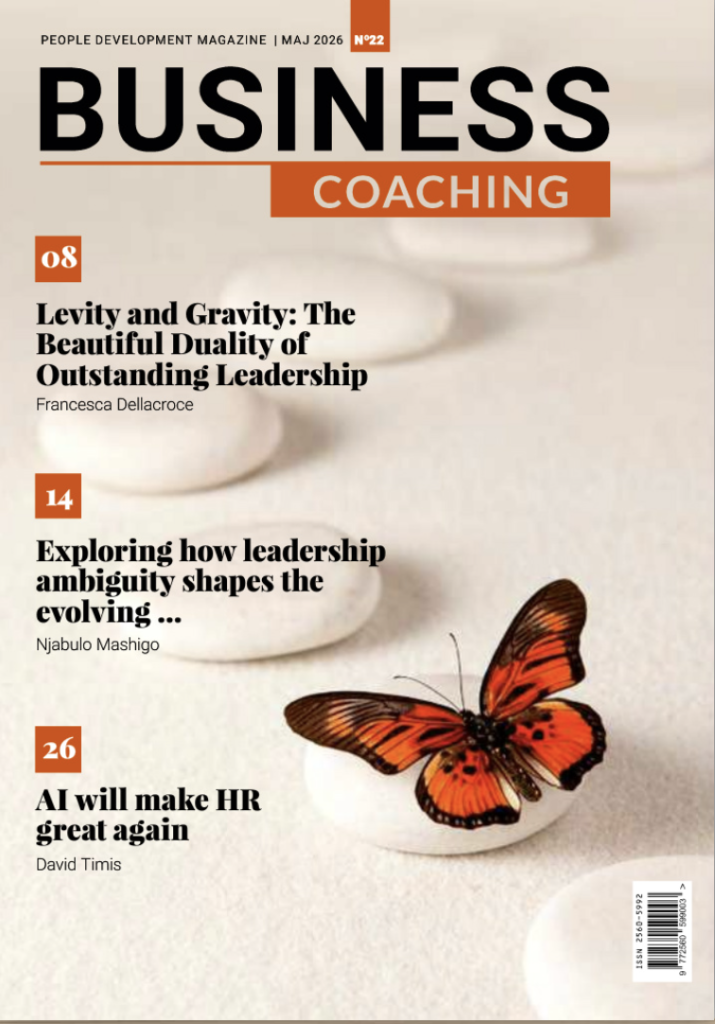
Levity and Gravity: The Beautiful Duality of Outstanding Leadership

Francesca Dellacroce

Strategically Driven HR Leader at Barilla Group

Amsterdam, Netherlands

Over the years, I’ve had the privilege, and at times the challenge, of working with very different kinds of leaders. Some left a lasting mark, shaping how I think, grow, and show up at work. Others… left a different kind of memory.

When I reflect on the leaders I truly valued, and the leader I’m still trying to become, I keep coming back to the same realization: the best leaders are not defined by a single style, but by their ability to balance two seemingly opposite forces.

Levity and gravity.

It is in the tension between these two that something meaningful happens. You begin to see environments where expectations are high, but so is energy. Where performance matters, but people do too. Where results are delivered, and the journey to get there actually feels meaningful.

Outstanding leadership does not come from choosing one over the other. It comes from holding both. Gravity defines the path, while levity lights the way.

Understanding Gravity: The Force That Grounds

When we think about strong leadership, we often associate it with what the ancient Romans described as gravitas, a sense of weight, seriousness, and authority.

Gravity shows up as clarity of purpose, strength of vision, courage in decision-making, and discipline in execution. It is the ability to deal with complexity, make deliberate choices, and stay steady when things are uncertain. Leaders who bring gravity create focus, provide structure, hold people accountable, and ensure that things get done. This is often supported by great intelligence, self-confidence, and determination. It is also closely tied to integrity, the alignment between what we say and what we do, and to accountability, both in the short term and over time.

This perspective strongly resonates with what McKinsey & Company has emphasized for years in its work on performance: clarity, discipline, and consistency as the backbone of sustainable results.

Without gravity, leadership can drift. It becomes inconsistent, overly reactive, or too focused on keeping everyone comfortable, often at the expense of meaningful impact.

Understanding Levity: The Energy That Connects

If gravity grounds us, levity lifts us.

In my experience, levity is rarer and often misunderstood. It takes self-awareness, humility, and a genuine intention to care about how people experience the environment we create around them.

Levity is the ability to bring lightness into the workplace, not in a superficial way, but in a way that creates trust, connection, and shared energy. It is what turns a group of professionals into a real team.

 

Looking back at my years in consulting and in corporate HR roles, what stayed with me was never just the strategic plans or transformation projects. It was the human moments, long hours of intense focus suddenly interrupted by an unexpected, and often terrible, joke, followed by a room full of laughter and a shared sense of relief. Or a leader whose laughter would travel across the office and instantly lift the atmosphere without effort.

Those moments mattered, probably more than we tend to admit.

Because leaders who bring levity create psychological safety. People contribute more openly, share ideas more freely, and connect more naturally. That is where creativity and trust begin to grow.

This idea has also been explored in The Levity Effect by Gostick and Christopher, as well as by other leadership thinkers who have shown how humor and lightness can strengthen engagement, trust, and performance in organizations.

Levity is not about being unserious. It is about being human and allowing others to be the same. It also requires a shift away from ego. Leaders who embrace levity are less self-focused and more oriented towards others. In many ways, this reflects the essence of servant leadership, creating the conditions for people to succeed, grow, and feel genuinely valued rather than managed.

Levity is also deeply connected to sociability. It is the ability to build authentic relationships, to create informal space for connection, and to foster a sense of belonging that goes beyond roles and hierarchy. Sociability in leadership is not about being extroverted or always “on,” but about creating moments where people feel comfortable enough to be themselves.

Levity also changes how teams deal with failure. When mistakes are met with perspective instead of fear, people are far more willing to try again, learn, and improve.


Levity Drives Performance, Not Just Morale

There is still a tendency to see levity as a “nice-to-have.” In reality, it plays a much more fundamental role. When people feel safe, valued, and energized, they think differently. They take better risks, collaborate more openly, and recover faster when things don’t go as planned. They are also more willing to go the extra mile.

When fear is reduced, innovation has space to emerge. And fear, in many organizations, remains one of the biggest barriers to both innovation and long-term performance.

Gravity Builds High Performance, Levity Builds High Performers

If gravity brings clarity on what needs to be done, levity shapes how it gets done, together and in a way that people can sustain.

This can be summarized simply: gravity creates the conditions for performance, while levity unlocks the human factor in the people who make that performance possible.

The most effective leaders understand that results and relationships are not in competition. They are deeply interconnected.

A Conscious Leadership Choice

Levity is not accidental. It is not about being naturally extroverted or entertaining. It is a choice.

And equally, gravity is not about being serious all the time or leading through pressure.

Leadership is not about picking a side. It is about integrating both.

Leaders who rely only on gravity can become distant or overly intense. Those who lean only on levity may struggle to create direction and credibility.

But those who manage to balance both create something rare: a culture where high standards and human connection coexist.

Final Reflection

Leadership is not a fixed identity. It evolves over time, shaped by experience and intention.

If I had to reduce it to one idea, it would be this: the gravity of intention, combined with the levity of execution.

When leaders bring both, they do more than deliver results.

They create environments where people want to be, where they contribute, and where they grow.

And that is what makes leadership not just effective, but memorable.

Author’s Note

This article is dedicated to all the leaders who taught me, through inspiration, challenge, and many shared laughs, what it truly means to lead, by embodying the enchanting dance between levity and gravity.

Subscribe our newsletter

Sign up our newsletter to get update information, news and free insight.