Creative Leadership Through Game-Based Learning

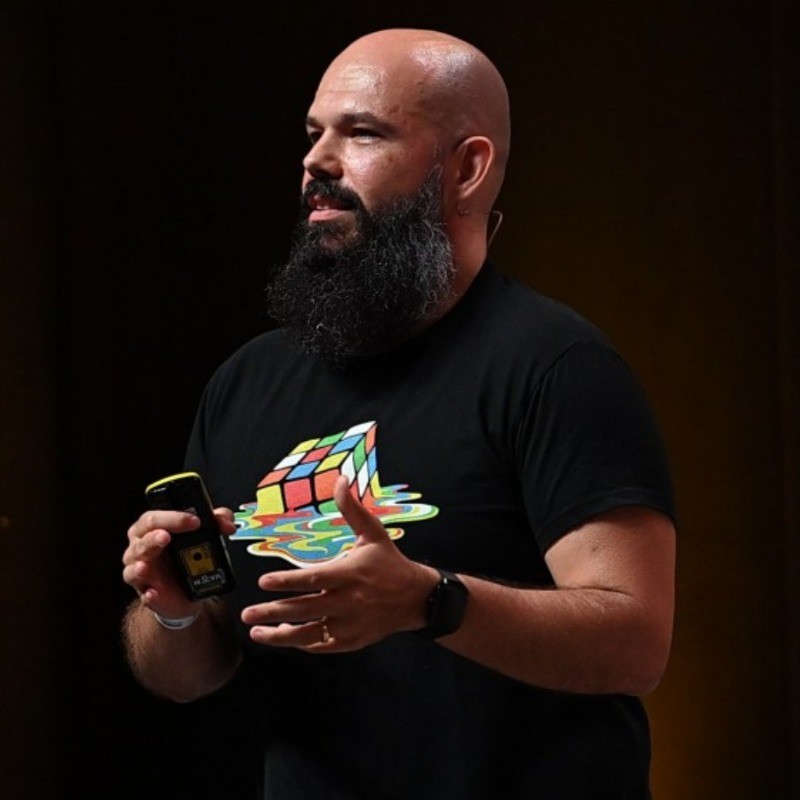
Thiago Barrionuevo

Founder and CEO of Cuboo Experience

Lisbon, Portugal

In a world where uncertainty, complexity, and rapid change are the norm, traditional leadership models are increasingly insufficient. Organizations no longer need leaders who simply control processes or enforce compliance. They need leaders capable of creating environments where people think, experiment, collaborate, and continuously learn.

Creative leadership is the ability to activate creativity, autonomy, and problem-solving within teams.

One powerful way to understand this concept is through the metaphor that life is a game. In this perspective, a leader is not merely a supervisor, but something closer to a Game Master in a role-playing game. The Game Master does not play the game for the players. Instead, they design the challenges, create the environment, and guide the journey so that each player can use their unique abilities to overcome obstacles.

Leadership, therefore, becomes less about giving answers and more about designing the conditions for collective intelligence to emerge.


Teams Are Like RPG Parties

A creative leader understands that teams resemble a party in a role-playing game. Each member has different skills, motivations, and perspectives. Some are analytical strategists. Others are explorers who enjoy experimentation. Some thrive on social connection, while others are driven by measurable achievement.

The mistake many leaders make is assuming that everyone is motivated by the same factors. This is where game design frameworks become extremely valuable for leadership development.

Understanding Motivation Through Bartle Player Types

The Bartle Player Types, originally developed for multiplayer games, describe four primary motivations that also appear in organizational environments:

  • Achievers seek progress, goals, and measurable success.
  • Explorers enjoy discovering new ideas and possibilities.
  • Socializers thrive on relationships and collaboration.
  • Killers (or competitors) are motivated by challenge and comparison.

In a team context, these profiles help leaders understand why different people respond differently to the same situation. A purely competitive system may energize achievers but discourage socializers. A highly structured environment may frustrate explorers who want freedom to experiment.

Creative leadership requires designing experiences where multiple motivational profiles can coexist and contribute.

The Role of Intrinsic Motivation

Another powerful framework often used in gamification is Octalysis, developed by Yu-kai Chou. This model identifies eight core drivers that motivate human behavior:

  1. Epic Meaning & Calling
  2. Development & Accomplishment
  3. Empowerment of Creativity & Feedback
  4. Ownership & Possession
  5. Social Influence & Relatedness
  6. Scarcity & Impatience
  7. Unpredictability & Curiosity
  8. Loss & Avoidance

In traditional management systems, motivation often relies heavily on external rewards and punishments. However, research in behavioral science and game design shows that intrinsic motivation is far more powerful and sustainable.

Game-Based Learning environments are particularly effective because they naturally activate several of these motivational drivers at once. Participants feel curiosity, ownership, collaboration, and progress simultaneously.

Creative leaders can apply these same principles to their teams by designing work environments that stimulate curiosity, autonomy, and meaningful progress.


Separating Divergent and Convergent Thinking

One of the most common barriers to creativity in organizations is the confusion between idea generation and idea evaluation.

In many meetings, teams jump too quickly into criticism and analysis before generating enough ideas. As a result, creativity is suppressed and only safe or conventional solutions survive.

To avoid this, techniques such as brainwriting are particularly useful. Instead of immediately discussing ideas, participants first write them individually before sharing them with the group. This simple shift dramatically increases idea diversity and prevents early judgment from killing potentially valuable ideas.

The principle is straightforward but powerful: ideas need space before they face evaluation.

Learning Through Experimentation

Creative leadership also requires a healthy relationship with failure. In traditional corporate cultures, mistakes are often punished, leading people to avoid experimentation. However, innovation requires exactly the opposite mindset.

In game environments, failure is expected. Players lose lives, restart levels, and try again with new strategies. Each failure becomes feedback rather than a judgment.

One useful practice is documenting mistakes and lessons learned in a structured way, sometimes referred to informally as “Fuck-Up Notes.” Instead of hiding errors, teams reflect on them, extract insights, and improve future decisions.

When organizations normalize intelligent experimentation, they unlock a powerful engine for learning and adaptation.

Leadership as Game Design

Creative leadership invites a shift in how leadership is perceived. Instead of focusing exclusively on authority or control, leaders can see themselves as designers of experiences.

Just as game designers craft environments where players feel motivated to act, leaders can create systems where teams feel safe to explore, collaborate, and solve complex problems together.

This includes designing:

  • meaningful challenges
  • clear goals and feedback loops
  • spaces for experimentation
  • opportunities for collaboration
  • recognition of progress and learning

When these elements are present, work becomes more than a list of tasks. It becomes a journey of continuous learning and collective achievement.

The Leader as a Lifelong Learner

Creative leadership is also deeply connected to the mindset of lifelong learning. Just as players evolve their characters throughout a game, leaders must continuously develop new skills, perspectives, and strategies.

The most effective leaders embrace curiosity, humility, and the willingness to learn from every experience. They understand that leadership is not a fixed role but an evolving practice shaped by reflection, experimentation, and feedback.

In the end, creative leadership is not about having all the answers. It is about asking better questions, creating better environments, and empowering people to solve problems together.

Because in the game of leadership, the true victory condition is not control.

It is collective growth.

Subscribe our newsletter

Sign up our newsletter to get update information, news and free insight.