- Thu, 12 November 2026

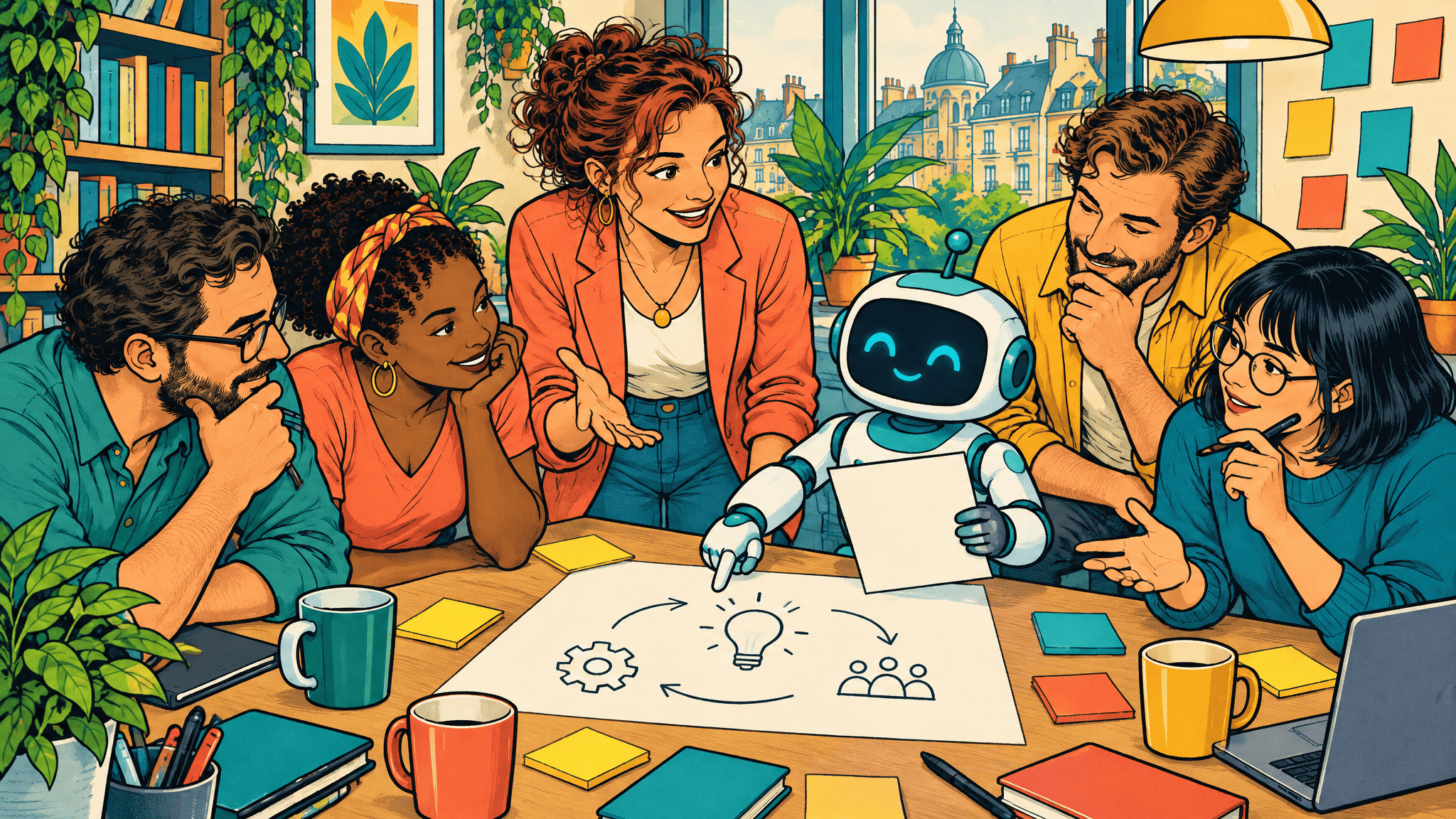
The hottest topic these days is not anymore for what are we using AI. That’s actually old news, ancient even. Prehistoric. We have already exited the era of passive AI utility. Yes, you might be surprised, scared or completely against it, yet still, that is how fast this change is happening. Real feel: 3 years ago you heard of AI, 2 years ago tried chatting with it, 1 year ago you might asked him for some small favors to analyze, research, summarize… and now you need to work with it.
Yes, you read it correctly, to work with AI, just not use it as a research tool. We have entered the new era of Human-AI teaming where agents act like semi-autonomous, proactive collaborators within a team. And when the agents shift from tool to a teammate, team dynamics fundamentally change. The dynamics, stages of development and the dysfunctions of the team health (Tuckman & Lencioni) are for sure being recalibrated when at least one of the participant is running on code and predefined filters rather than human.

Working with AI
So on a Monday mornig you have a new teammate, only this time you are the one who chooses what knowledge and practice that team member has. It is a change. And what we do with growth mindset when there is a change? We try to adapt. We learn from experience. And in business the mantra is change or stop existing. So… I think the choice is pretty clear.
How would the new member be onboarded usually? You give some instructions, explanations, context, rules, and the person already has the skills. Basically, with some knowledge sharing, the colleague should be onboarded very fast. It is the same with the agent, you give him instructions and share knowledge, the only difference is you also add skills that it needs to perform a certain task, provide certain service, make a certain product, or improve part of the process.
The main goal of including it in the process flow is to relieve humans of the boring, manual, repetitive, time-consuming tasks, and reduce waste, while allowing space for some more creative work. It would help reduce waste created by context switching and let people focus on empathy, judgement, making decisions and delivering high impact – high value results.
Teaming up with AI
AI agents cannot replace team dynamics, however they can magnify and accelerate uncovering them. In a low trust environement or at the beggining of team forming, adding autonomous agents might accelerate paranoia, blame shifting, superficial compliance. However in a high trust environement and psychologically safe team AI agent can act as a force multiplier: taking on administrative load, sharpening healthy discussions and giving people space for innovation and creativity.
How team dynamics and Lencioni’s 5 dysfunctions could look when AI is included in the game:
Before we asked: Are we being comfortable, vulnerable and transparent with one another? Can we admit mistakes, ask for help and show uncertainty without feeling judged, rejected or humiliated?
Now we additionally ask: Do we know what AI can or cannot do? Do we trust AI and to what extent can we trust it? How much responsibility should be given to the agent?
Pitfalls: Team blindly trusts AI or distrusts it completely. Fear that AI should spy on them
Before we asked: Can we openly raise concerns, challenge ideas, give opinions, while feeling safe to do it in front of the whole group?
Now we additionally ask: How do we debate with AI? Do we even debate with it? Shall we let it influence our decisions?
Pitfall: The team accepts AI output without debate or will not challege people who made the agent
Before we asked: Do we feel ownership for the delivery? Is everything clear after the debate and was there a buy-in? Do we know and accept the decisions, direction, next steps?
Now we additionally ask: Does team feel ownership over agent? Is the team commited to review how and what input is delivered?
Pitfall: People accept everything that is AI generated and do not feel true ownership because they did not make it themselves
Before we asked: Do we confront missed deadlines, underestimated commitments and loose quality assertively and constructively? Do we hold each other accountable on what and how we agreed to work?
Now we additionally ask: Who is responsible for checking and reviewing agent’s output?
Pitfall: Blaming the algorithm or too much relying on the agent
Before we asked: Do we prioritize team shared purpose and goal, over individual interests, personal status and development?
Now we additionally ask: Is AI helping us achieve meaningful team outcomes? Are we tracking quality, impact and content produced by agent?
Pitfall: People get into atrophy of Critical thinking because they are offloaded too much cognitive labor on agent or fail to check on and improve the agent

Takeaway for leadership: everything is so connected, and it falls like dominos if not handeled getly and with care. You will not get results without accountability. You cannot hold someone accountable for a plan they did not commit to. You cannot get commitment without a healthy challenge. You cannot have a healthy challenge without trust. You cannot get trust witouth feeling safe.
Overall conclusion: A, Agile or AI transformation, at the end it does not matter. Teams should keep the agile mindset and try to realise where can AI help them accelerate as a whole, improve delivery, become self organized and hogh performing by getting back to creative work and making decisions. So go for it, include the agents in the team, but keep people behind the wheel with clear boundaries around responsibility, roles, ownership and decisionmaking process. And how to do it, you will find out in the next article.

Sign up our newsletter to get update information, news and free insight.