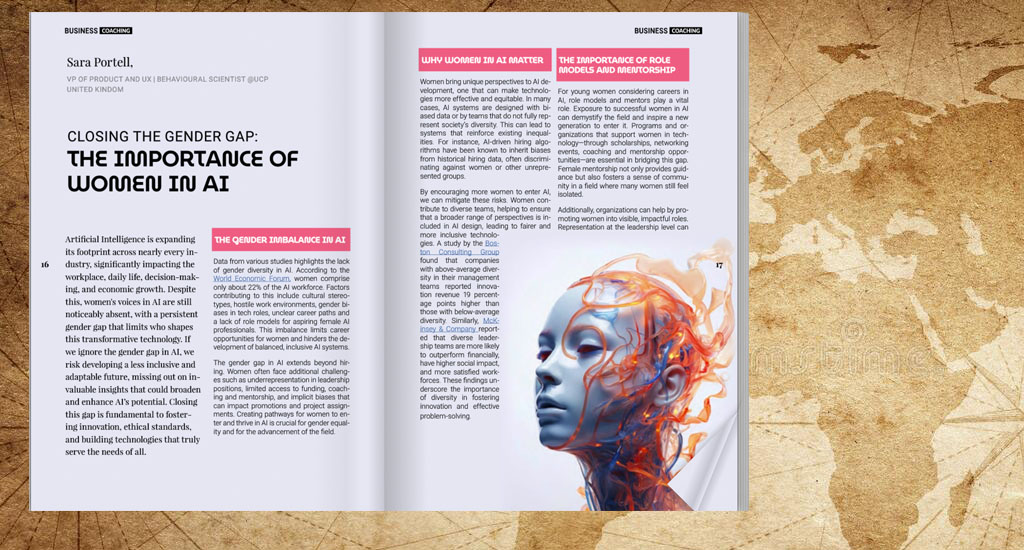
Artificial Intelligence is expanding its footprint across nearly every industry, significantly impacting the workplace, daily life, decision-making, and economic growth. Despite this, women’s voices in AI are still noticeably absent, with a persistent gender gap that limits who shapes this transformative technology. If we ignore the gender gap in AI, we risk developing a less inclusive and adaptable future, missing out on invaluable insights that could broaden and enhance AI’s potential. Closing this gap is fundamental to fostering innovation, ethical standards, and building technologies that truly serve the needs of all.
The Gender Imbalance in AI
Data from various studies highlights the lack of gender diversity in AI. According to the World Economic Forum, women comprise only about 22% of the AI workforce. Factors contributing to this include cultural stereotypes, hostile work environments, gender biases in tech roles, unclear career paths and a lack of role models for aspiring female AI professionals. This imbalance limits career opportunities for women and hinders the development of balanced, inclusive AI systems.
The gender gap in AI extends beyond hiring. Women often face additional challenges such as underrepresentation in leadership positions, limited access to funding, coaching and mentorship, and implicit biases that can impact promotions and project assignments. Creating pathways for women to enter and thrive in AI is crucial for gender equality and for the advancement of the field.
Why Women in AI Matter
Women bring unique perspectives to AI development, one that can make technologies more effective and equitable. In many cases, AI systems are designed with biased data or by teams that do not fully represent society’s diversity. This can lead to systems that reinforce existing inequalities. For instance, AI-driven hiring algorithms have been known to inherit biases from historical hiring data, often discriminating against women or other unrepresented groups.
By encouraging more women to enter AI, we can mitigate these risks. Women contribute to diverse teams, helping to ensure that a broader range of perspectives is included in AI design, leading to fairer and more inclusive technologies. A study by the Boston Consulting Group found that companies with above-average diversity in their management teams reported innovation revenue 19 percentage points higher than those with below-average diversity. Similarly, McKinsey & Company reported that diverse leadership teams are more likely to outperform financially, have higher social impact, and more satisfied workforces. These findings underscore the importance of diversity in fostering innovation and effective problem-solving.
The Importance of Role Models and Mentorship
For young women considering careers in AI, role models and mentors play a vital role. Exposure to successful women in AI can demystify the field and inspire a new generation to enter it. Programs and organizations that support women in technology—through scholarships, networking events, coaching and mentorship opportunities—are essential in bridging this gap. Female mentorship not only provides guidance but also fosters a sense of community in a field where many women still feel isolated.
Additionally, organizations can help by promoting women into visible, impactful roles. Representation at the leadership level can challenge stereotypes about who belongs in AI and encourage more women to take on leadership positions in the future. This, in turn, creates a ripple effect, inspiring more young women to pursue AI as a viable and fulfilling career path.

Building Inclusive AI Communities
One solution to bridging the gender gap is fostering inclusive AI communities that actively welcome and support women. Initiatives such as women-focused coding bootcamps, diversity workshops, mentorship programs, and industry groups dedicated to women in AI provide essential resources and support. Additionally, offering scholarships and grants, creating AI research fellowships specifically for women, and hosting women-centered AI conferences and summits all contribute to a more inclusive ecosystem. These efforts provide women with the skills, networks, and opportunities needed to thrive in the AI field, creating a more collaborative, balanced and innovative industry overall.
Moreover, these initiatives benefit companies as well. Diverse work environments often attract top talent, improve retention rates, and lead to a positive, inclusive culture. Companies investing in inclusive hiring practices and diverse teams not only promote equality but also drive innovation and improve decision-making processes across their AI projects.
The Path Forward
Closing the gender gap in AI is a multi-faceted challenge, but it’s achievable with concerted efforts from industry, academia, and government. Companies can foster inclusivity by implementing diversity-focused hiring practices, supporting mentorship programs, creating pathways for women’s advancement, and offering organizational sponsorships for women in AI. Schools and universities can play a role by encouraging young women to pursue STEM fields, offering AI-focused courses, and providing scholarships or funding opportunities specifically for women in tech. Government support is also vital, as policies promoting gender diversity in tech, grants for women-led AI startups, and public funding for AI training programs targeting women can make significant impacts. Achieving gender equality in AI is not about filling a quota; it’s about building a robust, innovative, and ethical future. When women are empowered to participate fully in AI, we open the door to a more comprehensive and equitable digital world. By valuing diverse voices, we pave the way for AI that truly benefits society as a whole.