What a Zen Sculptor Can Teach Us About Coaching
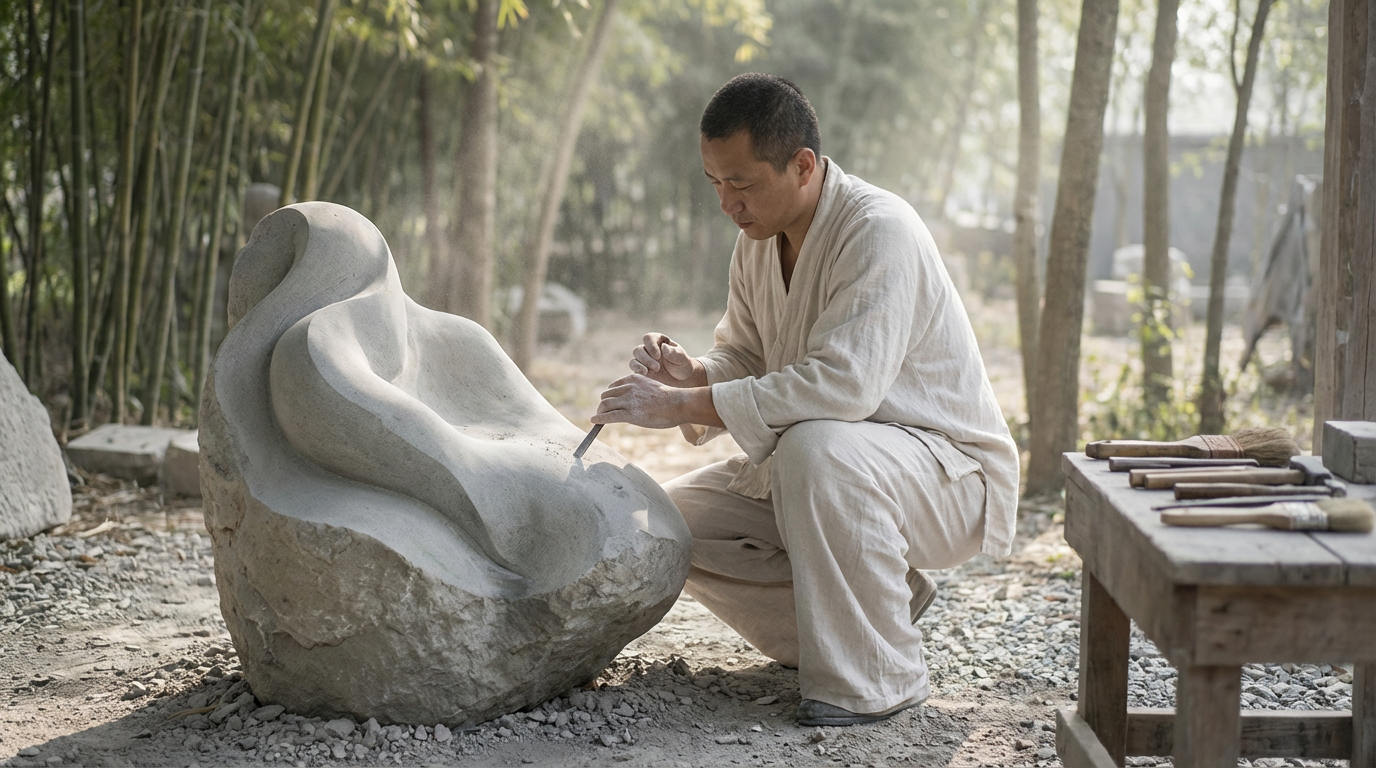
A Zen story tells of a master sculptor of stone known for creating extraordinary artistic works, renowned not only for technique, but rather by the artist’s philosophical approach and spiritual inspiration. When asked about his process, he once described something that puzzled many of his fellow artists.
Inspired to create his supreme masterpiece, he set out on a quest searching for the perfect stone. He looked for one that spoke to him — one that seemed to contain a presence waiting to be revealed.
When he finally chose the stone, he did not begin carving immediately. Instead, he placed it in his workspace and simply lived with it. For months he observed it quietly. He watched how light and shadow touched its rough surface at different moments of the day. He observed its natural lines and fractures. Sometimes he sat in front of it in silence for hours, as if listening.
His colleagues found this unusual.
“Art requires movement and action,” they would say. “Why do you spend so much time doing nothing?”
But the master would reply calmly that the work would reveal itself at the right moment.
Only after long observation did he finally pick up the hammer and chisel. And even then, his movements were slow and deliberate. Each strike seemed guided by something already present within the material.
A majestic creation unveiled.
When someone later asked how he had created such a beautiful sculpture, the master simply answered:
“I did not create it. I allowed it to reveal itself, removing what was not part of it.”
The story is a reflection on artistic mastery, but it also offers a striking metaphor for the work of coaching – in mindset and approach.
In many professional environments, coaching is framed as a process of generating insight or facilitating change. Coaches are trained to ask powerful questions, guide reflection and help clients move toward action. These are valuable skills.
With this story, the Zen sculptor invites us to consider a quieter dimension of the work.
Before the carving begins, there is observation and before any intervention, there is attention.
The sculptor does not rush the stone. He studies it, allowing time to understand its structure, its lines and its tensions. What may look like inactivity from the outside is in fact a deep form of preparation and groundwork.
Coaching often requires something similar.
When a client enters the conversation, it can be tempting to move quickly toward solutions or insights. Coaches may feel an internal pressure to demonstrate value, to guide the dialogue toward meaningful outcomes. Yet the quality of the coaching alliance rarely emerges from speed. It emerges from presence.
Like the sculptor studying the stone, the coach learns to observe carefully. Listening is not only about hearing words, but about noticing patterns, hesitations, emotional tone and underlying assumptions. The coach becomes attentive to the natural contours of the client’s experience.
This phase of quiet attention can be misunderstood. From the outside it may look like the coach is simply listening without doing very much. In reality, something important is taking place: the relationship is forming.
Alliance and rapport are not built through technique alone. They grow when the client senses that the coach is genuinely interested in understanding them, rather than quickly shaping the conversation.
In the Zen story, the sculptor’s patience allows him to recognize what the stone can become without forcing it into a predetermined form. Similarly, a coaching mindset requires trust in the client’s inner capacity to discover meaning and direction.
The coach does not impose structure where it does not belong. Instead, the conversation gradually reveals its own shape.
When the time for intervention arrives — when the coach finally “picks up the hammer and chisel” — the action is intentional and precise. A carefully placed question, a reflection, or a moment of silence can help the client see something from a different perspective.
But these interventions carry weight precisely because they arise from attentive observation rather than urgency.
The sculptor strikes the stone only where it makes sense to do so. Similarly, the coach speaks when the moment invites it.
This perspective shifts how we understand the coaching mindset. Rather than focusing primarily on activity — asking questions, generating ideas, guiding action — the mindset also includes patience, restraint and trust in the unfolding of the client’s thinking.
The coach learns to tolerate periods where the process appears slow or uncertain. Just as the sculptor’s colleagues doubted his methods, there may be moments when stillness feels uncomfortable. Nonetheless it is often within this space that the deeper work takes place.
Gradually, the client begins to see something more clearly – a gentle loosening of a long-held assumption, a clearer and more grounded recognition of an underlying value, and the emergence of a more coherent sense of direction.
Like the sculpture within the stone, these insights were not created by the coach. They were already part of the client’s inner landscape.
The coach simply helped remove what obscured them.
The Zen master’s approach reminds us that meaningful work does not always begin with action, but rather with careful observation and a willingness to wait.
This idea reaches beyond professional practice. It touches something more universal about how we relate to one another.
Every meaningful conversation carries a certain influence. Through our words, our questions, even through our silence, we inevitably touch the lives of others – sometimes deliberately, sometimes by accident.
The sculptor’s hammer and chisel may offer a useful metaphor for this.
A chisel can be used with force, imposing a shape onto the stone. But in the hands of a master, it becomes something else: a precise instrument for removing what does not belong.
Language works in a similar way: a rushed question, an interpretation offered too quickly, or advice given without understanding can leave marks that were never necessary. But attentive listening and carefully chosen words can do something very different. They can help loosen what has hardened around a person’s thinking — beliefs that no longer serve them, expectations borrowed from others, or stories that were never truly their own.
As these constraining layers begin to gradually peel off, a clearer, more authentic inner clarity can emerge — not something externally imposed, but something already present within.
In this sense, meaningful dialogue — whether in a professional setting, a mentoring relationship, or an ordinary conversation between two people — can become a smooth act of uncovering.
It requires patience and trust in the other person’s capacity to find their own form. And it requires self-control: the discipline not to carve too quickly, not to force clarity where the material is still revealing itself.
The Zen sculptor did not create the statue within the stone. He simply connected to its meaning and need to be revealed, recognized it, waited for the right moment, and gradually removed what concealed it.
Might it be possible for our conversations to unfold in a similar way?
Through attentive presence and thoughtful language, we might humbly support the gradual release of what was never essential in the first place.
And in that process, even briefly, we may witness something remarkable: the emergence of someone’s own mastery.