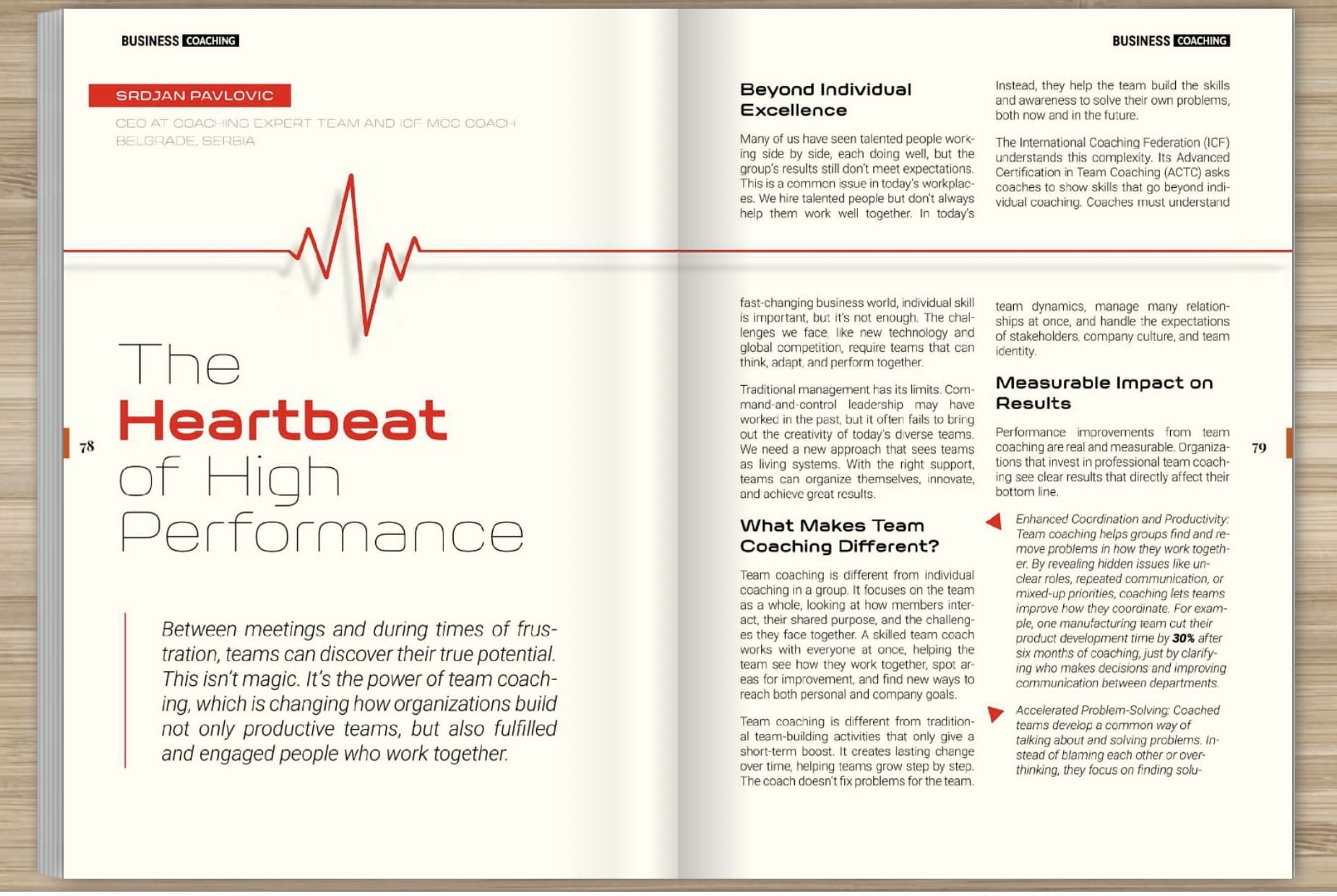

Between meetings and during times of frustration, teams can discover their true potential. This isn’t magic. It’s the power of team coaching, which is changing how organizations build not only productive teams, but also fulfilled and engaged people who work together.
Beyond Individual Excellence
Many of us have seen talented people working side by side, each doing well, but the group’s results still don’t meet expectations. This is a common issue in today’s workplaces. We hire talented people but don’t always help them work well together. In today’s fast-changing business world, individual skill is important, but it’s not enough. The challenges we face, like new technology and global competition, require teams that can think, adapt, and perform together.
Traditional management has its limits. Command-and-control leadership may have worked in the past, but it often fails to bring out the creativity of today’s diverse teams. We need a new approach that sees teams as living systems. With the right support, teams can organize themselves, innovate, and achieve great results.
What Makes Team Coaching Different?
Team coaching is different from individual coaching in a group. It focuses on the team as a whole, looking at how members interact, their shared purpose, and the challenges they face together. A skilled team coach works with everyone at once, helping the team see how they work together, spot areas for improvement, and find new ways to reach both personal and company goals.
Team coaching is different from traditional team-building activities that only give a short-term boost. It creates lasting change over time, helping teams grow step by step. The coach doesn’t fix problems for the team. Instead, they help the team build the skills and awareness to solve their own problems, both now and in the future.
The International Coaching Federation (ICF) understands this complexity. Its Advanced Certification in Team Coaching (ACTC) asks coaches to show skills that go beyond individual coaching. Coaches must understand team dynamics, manage many relationships at once, and handle the expectations of stakeholders, company culture, and team identity.

Measurable Impact on Results
Performance improvements from team coaching are real and measurable. Organizations that invest in professional team coaching see clear results that directly affect their bottom line.
Enhanced Coordination and Productivity: Team coaching helps groups find and remove problems in how they work together. By revealing hidden issues like unclear roles, repeated communication, or mixed-up priorities, coaching lets teams improve how they coordinate. For example, one manufacturing team cut their product development time by 30% after six months of coaching, just by clarifying who makes decisions and improving communication between departments.
Accelerated Problem-Solving: Coached teams develop a common way of talking about and solving problems. Instead of blaming each other or overthinking, they focus on finding solutions. They use their different viewpoints as strengths, not sources of conflict. This leads to faster product launches, more creative ideas, and better responses to changes in the market.
Goal Alignment and Strategic Focus: One of the biggest benefits of team coaching is helping teams see how their daily work connects to the company’s larger goals. Many teams aren’t sure how their efforts fit into the bigger picture. Team coaching brings everyone together through guided conversations, so team members understand how their personal goals, team objectives, and company strategy all connect. This clear sense of purpose motivates people and helps them focus on what matters most.
Leadership Development at Scale: When teams take part in coaching, leadership starts to show up everywhere in the organization, not just at the top. Team members gain confidence to take action, make decisions, and help each other grow. This shared leadership is important for organizations facing change and complexity. Instead of depending on one leader, coached teams build a stronger, more flexible leadership together.
Employee Satisfaction and Engagement
Performance numbers are important, but they don’t tell the whole story. The real change is in how people feel about their work and their relationships with coworkers. This is where team coaching makes the biggest and most lasting difference.
Psychological Safety and Belonging: In teams that have been coached, people feel safe to speak up, share ideas, and admit mistakes. This isn’t just about being friendly. It’s about building a place where everyone’s ideas can come forward. When team members trust they won’t be punished for taking reasonable risks or asking honest questions, innovation grows. Employees feel more valued, listened to, and important to the team’s success. This sense of belonging is a key reason people stay satisfied and stay with their jobs.
Meaningful Conversations: Team coaching makes it normal for teams to stop and talk about how they work together, what’s going well, and what could be better. These talks about values, teamwork, and support help people feel seen and understood. Employees in coached teams often say they are happier with their work relationships, which research shows matters more for job satisfaction than pay.
Personal Growth Within Team Context: Team coaching helps people grow as individuals by focusing on the group. As the team improves, each person finds new strengths. For example, a quiet analyst might start sharing ideas, a strong leader might learn to listen more, and a skeptic might begin to support others’ ideas. This growth happens naturally in the team, so it’s useful right away and supported by coworkers. Employees feel they are not just working, but also growing as professionals and people.
Reduced Burnout and Stress: When teams work well, jobs become more manageable. Coached teams set better habits for sharing work, supporting each other during busy times, and talking honestly about what they can handle. Instead of struggling alone, team members learn to ask for and give help. This shared strength helps prevent burnout. People in these teams report less stress and a better balance between work and life.
Sense of Agency and Ownership: Team coaching gives people more control over their work. Instead of feeling like just another part of the machine, team members see themselves as creators of their team’s culture and results. They don’t just follow rules—they keep making things better. This feeling of having influence is motivating and leads to more engagement and commitment.

Creating Cultures of Continuous Learning
Organizations that use team coaching do more than improve single teams—they start a culture change. As coached teams show new ways of working, others notice the better teamwork, safety, and results, and want to do the same. Leaders who join team coaching bring these habits to other teams they lead.
Over time, coaching becomes part of the organization’s culture. Tough conversations become normal. People expect to learn from mistakes. Asking good questions becomes more common than always having the answers. This shift toward a true learning organization, where coaching is a strength, gives companies an advantage that others can’t easily copy.
The Investment That Pays Forward
Investing in professional team coaching with ICF-certified programs takes time, money, and commitment. But the return is one of the best among all development efforts. Unlike training that may not get used, team coaching happens in real work situations and tackles real challenges. The learning is immediate, practical, and supported by the team.
The skills learned through team coaching, like good communication, conflict resolution, strategic focus, and teamwork, can be used in many situations. Teams bring these abilities to new projects and challenges. People who have had strong team coaching often help others, spreading the benefits even further.
The Team-Centric Future
As the world becomes more complex and connected, successful organizations will be those that use the full intelligence of their teams. This means moving away from old models of individual heroes and strict hierarchies, and instead using more collaborative, coaching-based leadership and teamwork.
Team coaching is a proven way to reach this future. It respects the complexity of people and teams, while giving practical tools for improvement. It supports both individual freedom and group strength. It brings real performance gains and makes work more meaningful.
For leaders ready to invest, for teams open to the challenge of growth, and for organizations focused on building a culture of excellence and care, team coaching is one of the best tools available. It’s not about working harder. It’s about working together with more skill, awareness, and humanity.
The teams of the future are being built now, one coaching conversation at a time. These changes go far beyond any single meeting or project. When teams discover new ways to work together, they don’t just get better—they imagine new possibilities for real collaboration. That’s a transformation worth aiming for.