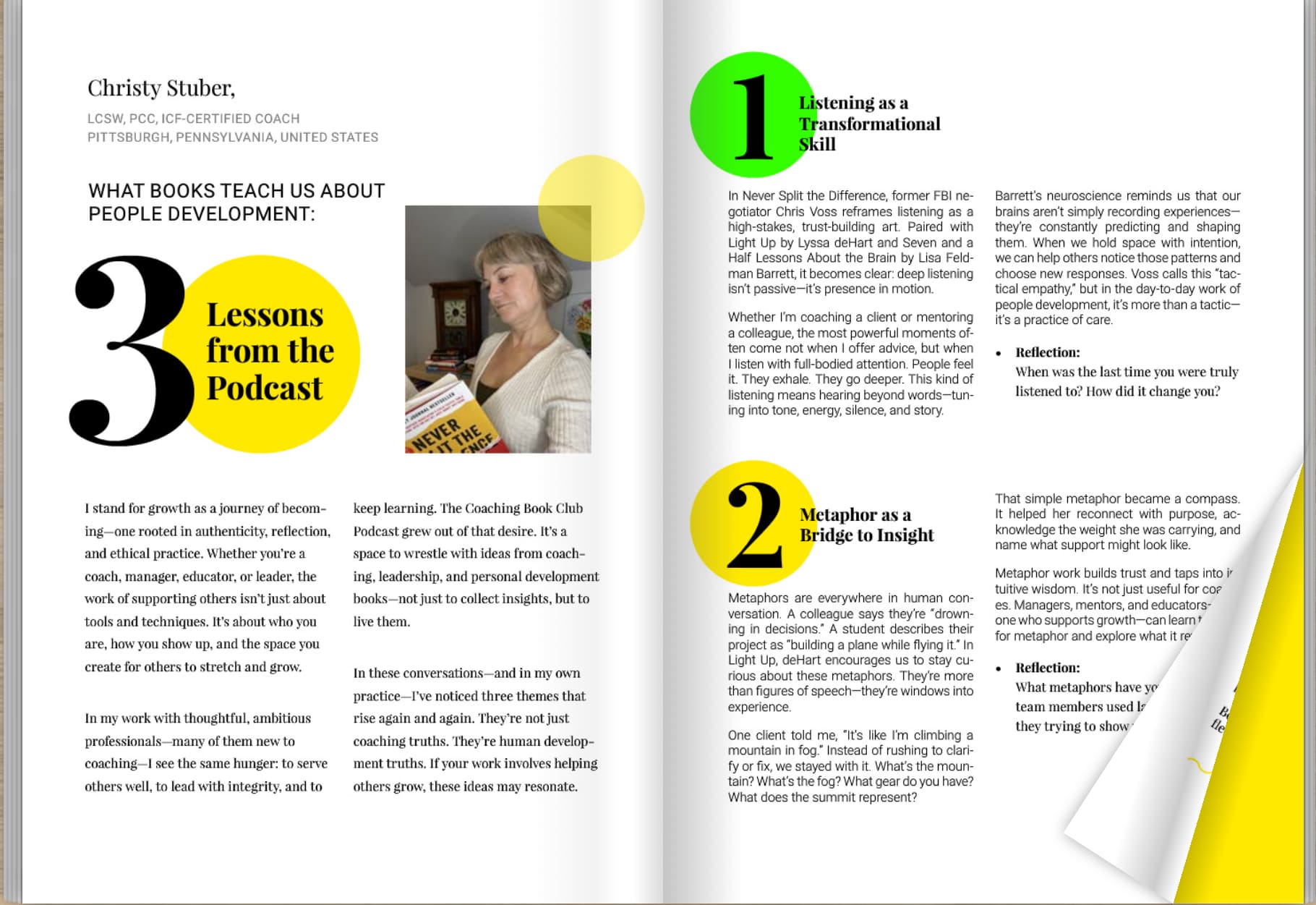
I stand for growth as a journey of becoming—one rooted in authenticity, reflection, and ethical practice. Whether you’re a coach, manager, educator, or leader, the work of supporting others isn’t just about tools and techniques. It’s about who you are, how you show up, and the space you create for others to stretch and grow.
In my work with thoughtful, ambitious professionals—many of them new to coaching—I see the same hunger: to serve others well, to lead with integrity, and to keep learning. The Coaching Book Club Podcast grew out of that desire. It’s a space to wrestle with ideas from coaching, leadership, and personal development books—not just to collect insights, but to live them.
In these conversations—and in my own practice—I’ve noticed three themes that rise again and again. They’re not just coaching truths. They’re human development truths. If your work involves helping others grow, these ideas may resonate.
1. Listening as a Transformational Skill
In Never Split the Difference, former FBI negotiator Chris Voss reframes listening as a high-stakes, trust-building art. Paired with Light Up by Lyssa deHart and Seven and a Half Lessons About the Brain by Lisa Feldman Barrett, it becomes clear: deep listening isn’t passive—it’s presence in motion.
Whether I’m coaching a client or mentoring a colleague, the most powerful moments often come not when I offer advice, but when I listen with full-bodied attention. People feel it. They exhale. They go deeper. This kind of listening means hearing beyond words—tuning into tone, energy, silence, and story.

Barrett’s neuroscience reminds us that our brains aren’t simply recording experiences—they’re constantly predicting and shaping them. When we hold space with intention, we can help others notice those patterns and choose new responses. Voss calls this “tactical empathy,” but in the day-to-day work of people development, it’s more than a tactic—it’s a practice of care.
Reflection: When was the last time you were truly listened to? How did it change you?
2. Metaphor as a Bridge to Insight
Metaphors are everywhere in human conversation. A colleague says they’re “drowning in decisions.” A student describes their project as “building a plane while flying it.” In Light Up, deHart encourages us to stay curious about these metaphors. They’re more than figures of speech—they’re windows into experience.
One client told me, “It’s like I’m climbing a mountain in fog.” Instead of rushing to clarify or fix, we stayed with it. What’s the mountain? What’s the fog? What gear do you have? What does the summit represent?
That simple metaphor became a compass. It helped her reconnect with purpose, acknowledge the weight she was carrying, and name what support might look like.
Metaphor work builds trust and taps into intuitive wisdom. It’s not just useful for coaches. Managers, mentors, and educators—anyone who supports growth—can learn to listen for metaphor and explore what it reveals.
Reflection: What metaphors have your clients or team members used lately? What are they trying to show you?
3. Language Shapes Reality (and Possibility)
The way people talk about themselves—what they say, what they avoid, what they repeat—offers insight into identity, values, and belief systems. Part of our role in people development is to help others hear their own language and consider whether it still fits.

Barrett’s research shows that naming emotions can help regulate them. In Voss’ world, mirroring language builds connection. In everyday development work, the words we use shape what feels possible. A shift from “I have to…” to “I choose to…” may sound small—but it’s a doorway to agency.
I often ask, “What would change if you said that a different way?” That question alone can lead to powerful reframes. When we reflect language back with care, we help people become authors of their own stories.
Reflection: What story is being told in the words someone keeps repeating? What might a new story sound like?
Books as Catalysts for Becoming
Books don’t have all the answers. But they do offer frameworks, questions, metaphors, and mirrors. They invite us to pause, to reflect, and to stretch. And when we engage with them intentionally—especially in community—they become more than resources. They become catalysts.
Whether you’re a coach, a leader, or someone who supports others in any capacity, I invite you to read more reflectively. Choose a book not just to finish it, but to be changed by it. Pay attention to what lingers. Share your insights. Let the pages prompt your next brave step.
Because in the end, people development isn’t just about skills. It’s about presence, reflection, and growth—for them, and for us.