What makes a team a team, actually?
Once, I was watching a recording of a training about team development, and the first story stuck in my head forever, so I always like to share it. There was a debate around what teams are actually „real“ teams and I will paraphraze the speech with my own understandings a bit: the topic was about how can a rowing team be a „real“ team when they are trying to reach the goal backwards, while blindly following a navigation from a person who has no clue how to row, and there is no coach in sight to intervene.
One of the players from a national rowing team was there, so he responded that actually, they are a perfect team. They are sharing a vision and a responsibility to reach the same goal; they all want to win. For that to happen, they are practicing every single day. They know each other very well, and they understand what to expect from each other. They trust each other that everyone will give their best, or have the courage to say when they are not at the top of the game at the moment. They trust the navigator to do what they do best, and that is navigating. They trust each other so much, especially when they know there is no help in sight. And the coach trusts them, they will support each other and reach the goal. And even if they do not reach the goal, they will learn from it and practice more and try again next time.
That is my all-time favorite explanation of a team. And actually, any type of team. It can be a sports, business, or any other kind of team; it does not matter. The core is that the people who make the team share the same responsibility towards reaching a goal, while at the same time, they are willing to learn how to work better with each other, but the most important thing is that they trust each other. And then the coach comes in. Even if you have all the best players in the field, that does not mean they are working well with each other, nor do they have trust. With that being said, teams always need someone to observe the bigger picture and guide, from the sides, objective, neutral, and curious, to support in progressing and maturing. And what is his aim? He helps a team develop in order to reach maturity.
If you read ICF team coaching competences, especially the table of differences between types of team development modalities, you will see one main difference is in the area of team dynamics/conflict resolution. It is the fact that coaching is integral in this area, while it is minimal and not a central idea in others. Also, I would add that apart from achieving goals and team sustainability, it would also bring clarity, insights, new knowledge, and even a new skill. So the team coach should know and embrace the skills needed for all the other development modalities as well as coaching, which is also confirmed in Competence Demonstrates Ethical Practice –
+ Maintains the distinction between team coaching, team building, team training, team consulting, team mentoring, team facilitation, and other team development modalities
+ Demonstrates the knowledge and skill needed to practice the specific blend of team development modalities that are being offered
How should the coach behave in order to develop a team?
We can take sports again as an example. I was once a volleyball player and a volleyball referee. From when I became a professional coach, even though I am working in business and not sports, I still got the other perspective that I was missing. Think about the coach who is standing on the lines, overseeing the bigger picture of the game. And the game actually matters less to him than the players, so he overlooks team dynamics. He observes each player, the team as a whole, and also the dynamics between multiple teams, plus the audience. The coach feels the shift in the atmosphere on the field, outside of the field. He asks questions, notices what the players were not in a position to notice because they were focused on the game, he was focused on them and the outside pressure. Also, sometimes, if appropriate, he points out what lets the team decide on what is the best outcome for them. If the team is less mature in working towards a goal together, the coach can guide them to maturity. But notice this… reaching a goal stays the team’s responsibility, and the coach’s responsibility is to partner and support on the way towards reaching that goal.
It is exactly the same for teams that work in bigger or smaller companies. They need to have a coach, or scrum master/team leader acting as a coach, who will help them develop into a mature, self-organized, and high-performing team. They need someone who can challenge and motivate them to think differently, who can notice when they need a break or just a reorganization, who can be vulnerable enough to admit their own mistakes, and show what transparency and accountability are.
Why does the coach let the team do their own thing most of the time?
Because the coach is there to support the team reach the best possible way of working together, meaning he cannot know for sure what works for them, it needs to come from them, as they are the professionals and should understand how they can do it best. Developing the team, making them aware of what is best to collaborate, will further help the team in reaching the shared goal. He wants to guide them to understand how they can overcome their obstacles on their own and develop to a higher level of maturity. The coach should listen, observe, encourage, empower, and ask questions that can move people away from their everyday thinking. He is there to lead by example, show vulnerability, and that mistakes and failures are just a place to learn from and not the thing that we should be overthinking.
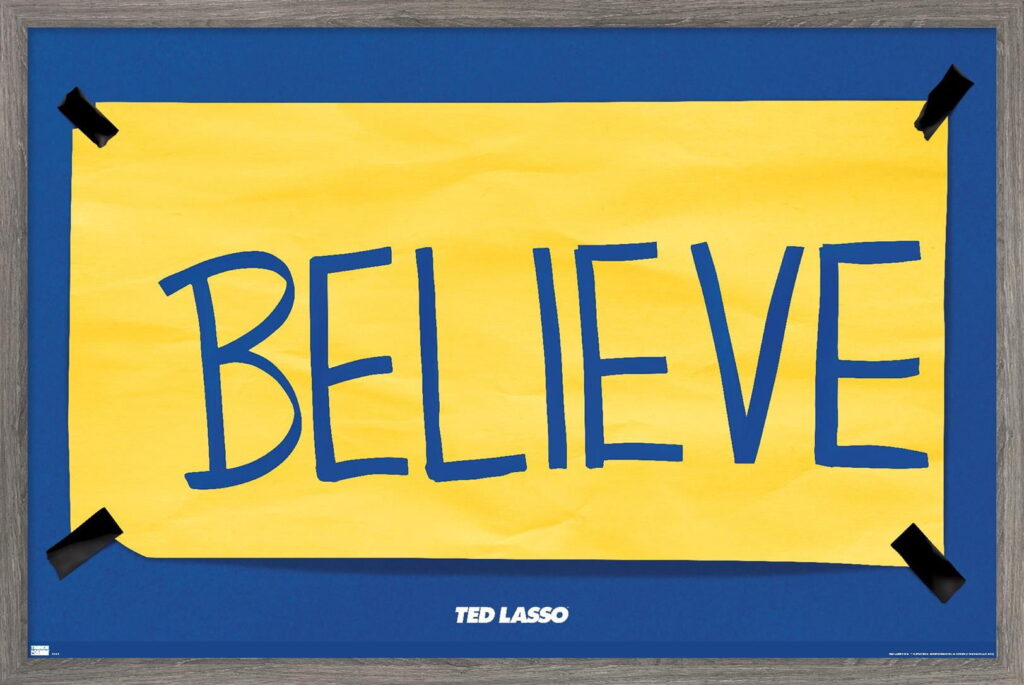
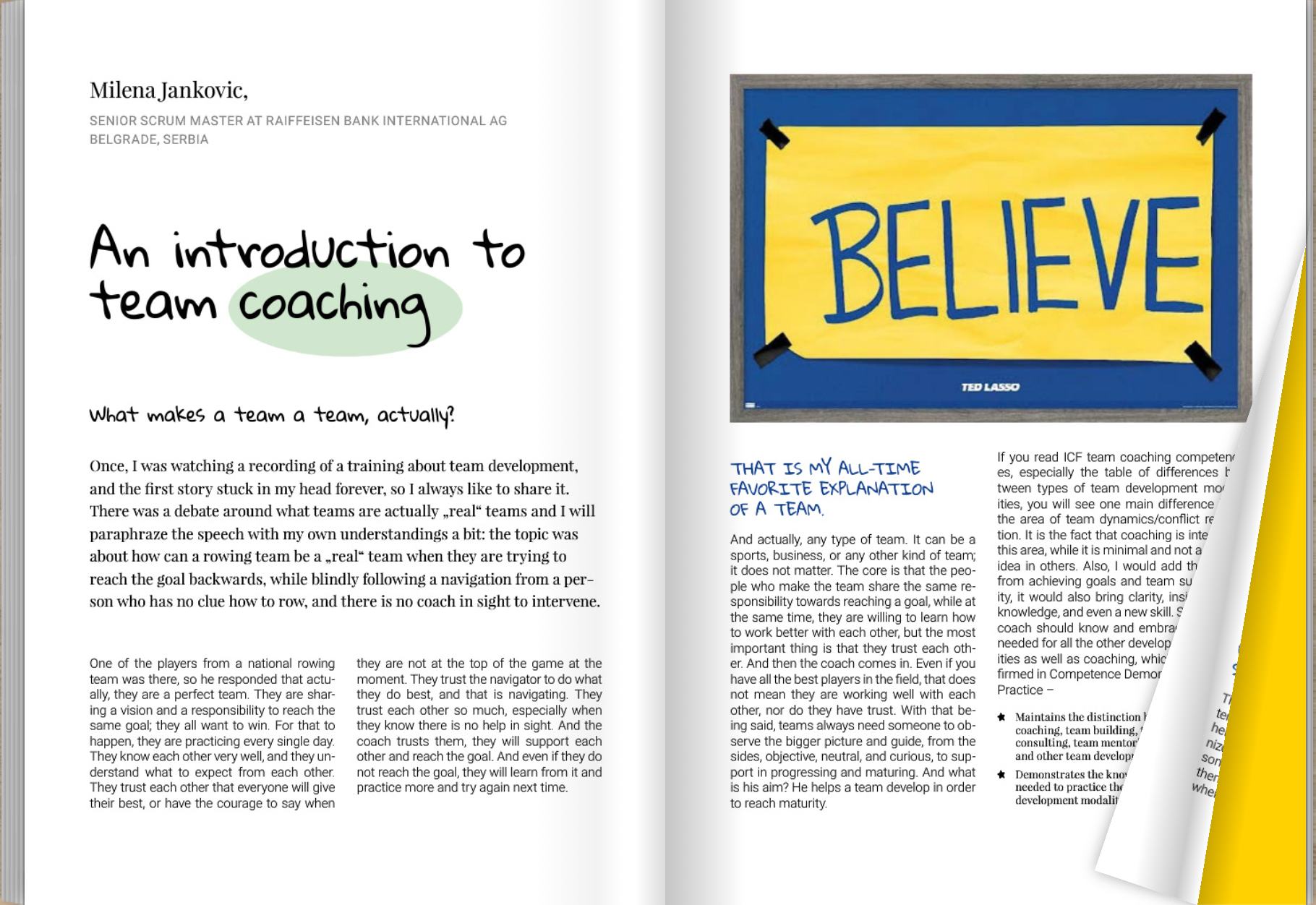
And what happens when a team becomes self-organized or outgrows the coach? They may pick a leader/coach from the team or simply someone new who can challenge and support them in different ways. The coach gets a new team or a different kind of system to work with. So the game of continuous improvement never stops. All you need to do is BELIEVE.